Labor Only Moving Help in Richmond, CA
JH Moving provides labor only loading and unloading across the Bay Area. You supply the truck or container. We send the crew, blankets, straps, and dollies. No truck charge, fuel charge, or mileage from us; you pay for hours worked, with rates explained upfront. Whether you are using a U-Haul in Oakland, a PODS drop in Berkeley, or a rental in San Francisco, we load it tight and strap it right. Use the buttons below to get a free estimate.
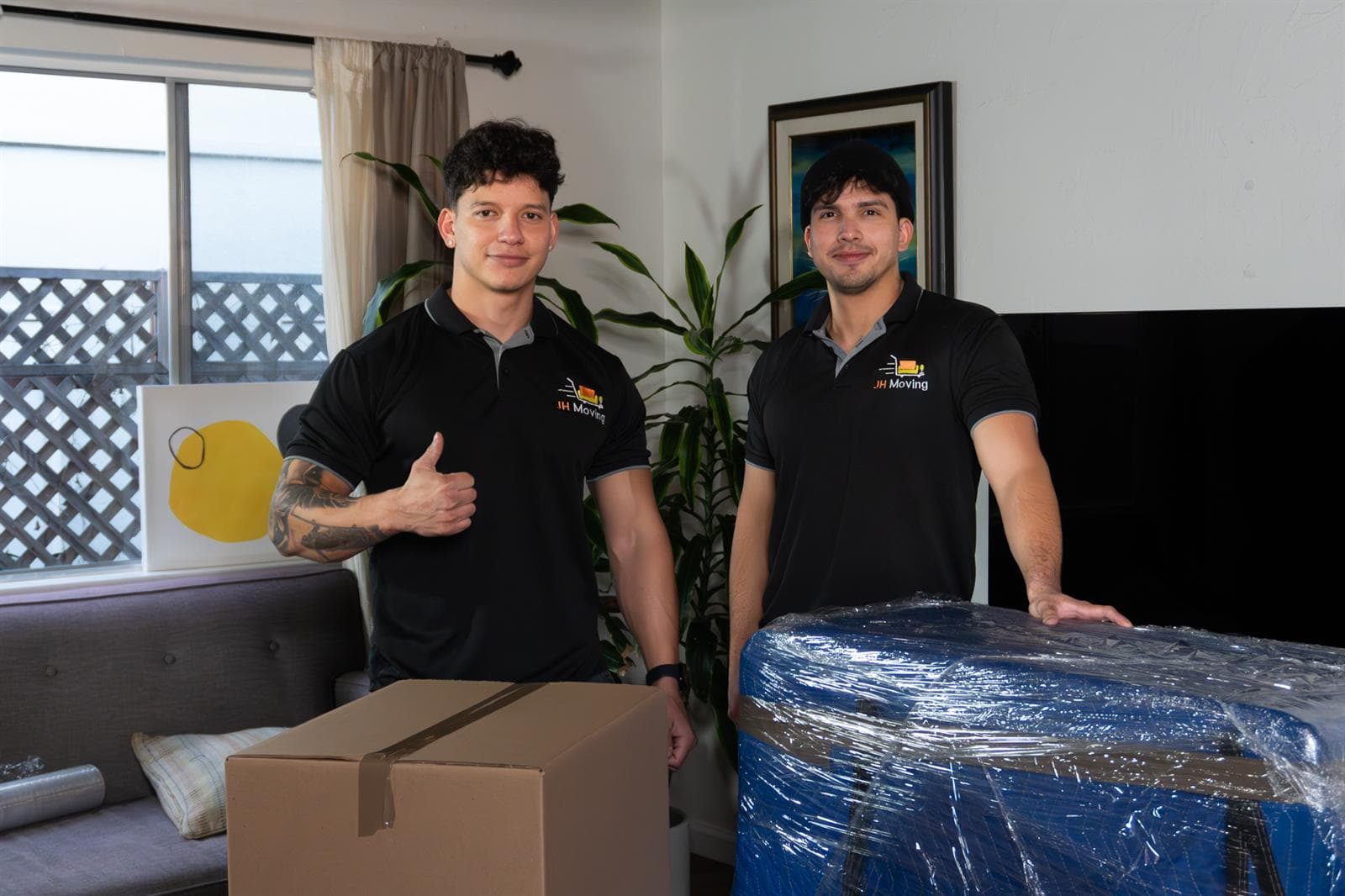
Licensed & Insured
Cal-T201700
What Labor-Only Moving Actually Means
Labor-only means you provide the transport (rental truck, portable container, storage unit, or no transport at all for in-home work) and we provide the licensed crew. No truck charge, no fuel charge, no mileage fee. You pay for hours worked at a transparent hourly rate, with pricing explained upfront before the crew arrives.
It's the right service when one of these describes your situation:
You've rented or reserved a truck. U-Haul, Penske, Budget, or another rental company. You're driving the truck yourself, either locally or long-distance, and you need a crew to load it correctly at the origin, unload it at the destination, or both.
You have a portable container. PODS, U-Pack ReloCubes, 1-800-PACK-RAT, Zippy Shell. The container is in your driveway or at a yard and needs to be loaded or unloaded. We cover this in detail on our PODS and container loading page.
You have a storage unit. Stuff needs to go into it or come out of it, and you're handling the transport part yourself (or the unit doesn't need transport at all, like an on-site climate-controlled unit at an apartment complex). See our storage unit moving page for dedicated coverage.
You just need muscle. In-home moves where nothing leaves the house. Staging prep, renovation support, heavy furniture rearrangement, cleanout prep. Covered in its own section below.
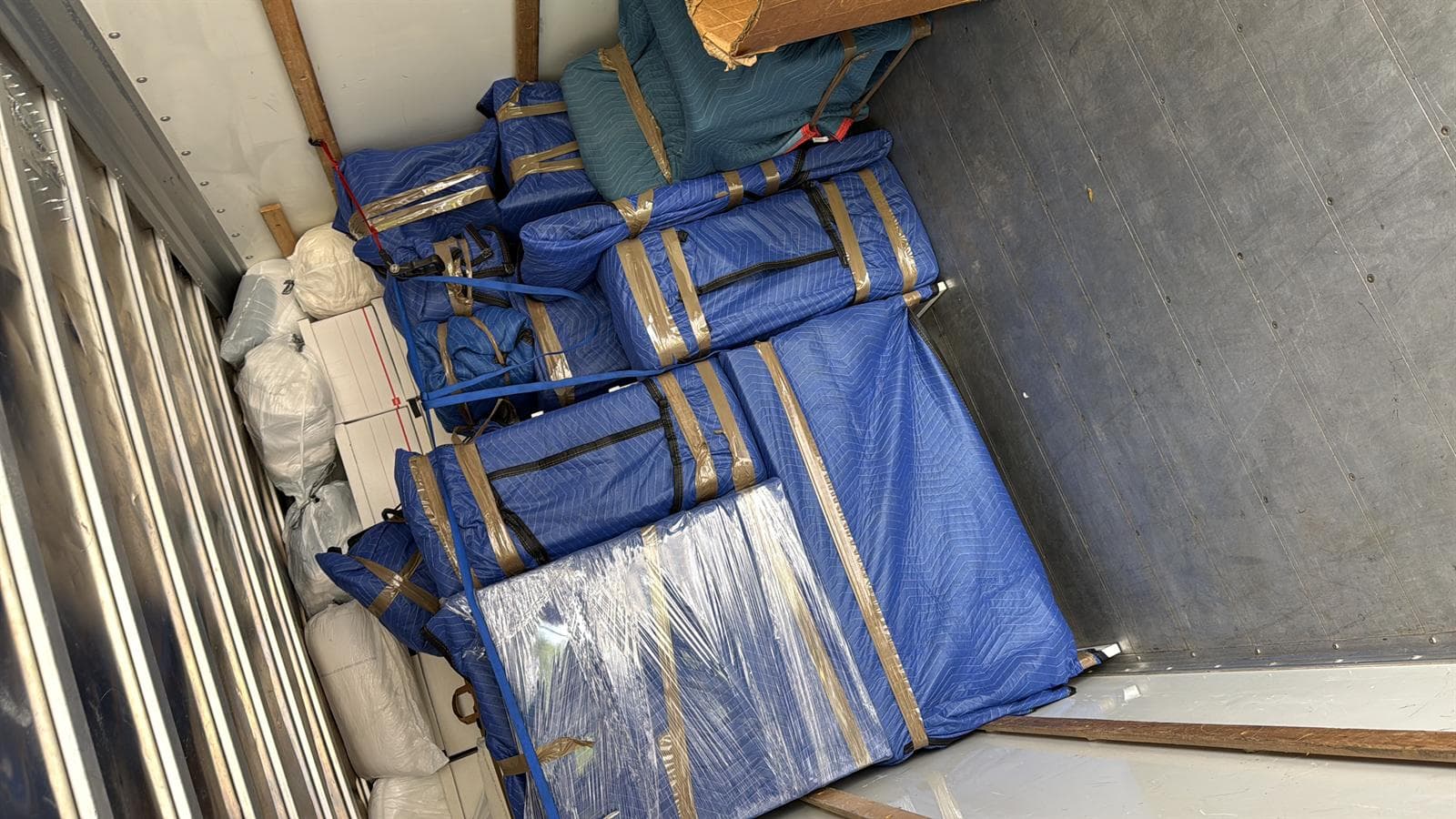
Every labor-only crew arrives with moving blankets, shrink wrap, tape, floor runners, moving straps, dollies, hand trucks, crew tools, up to 2 TV boxes, and up to 5 wardrobe boxes, all included in the hourly rate. We wrap furniture before loading, pad sharp corners, and strap everything down so nothing shifts during your drive.
Licensed under Cal-T201700 with full cargo and liability insurance. Every estimate includes a written Not to Exceed price. A $100 deposit secures your date and applies to the final invoice.
Loading a Rental Truck the Right Way
Most DIY rental-truck loads fail in one of three ways: the load shifts during transit and things break, the load doesn't balance properly and the truck handles badly on the road, or the truck runs out of space before everything is in it. Professional loading prevents all three, but understanding what we actually do on a loading job changes how you plan the rest of the move.
Heavy furniture and appliances against the front wall (the cab side) first. Refrigerators, washers, dryers, heavy dressers, armoires, and large bookcases go in first, standing upright, pushed flush against the front wall of the cargo area. This does two things: puts the heaviest weight over the truck's front axle for proper balance (a rear-loaded truck drives badly and can bottom out on hills), and establishes a stable base for everything stacked in front of it.
Mattresses and headboards on their edges along the side walls. Mattresses laid flat waste the most valuable cubic footage in the truck and can be compressed by weight stacked on top. Stood on their edges along the inner walls, they protect furniture from scuffing against the truck walls and maximize usable floor space.
Long items oriented lengthwise along the cargo area. Couches, dining tables, long bookshelves, and ladders go lengthwise, not across the truck. A 7-foot couch placed across the cargo area wastes four or five feet of length. Placed along one wall, it takes the same square footage but leaves a corridor for everything else.
Boxes stack in columns, floor to ceiling, heaviest on the bottom. Once the furniture base is in, boxes fill remaining space in tight columns. Heaviest boxes on the bottom (books, dishes, pantry items), medium in the middle, lightest and most fragile on top. Columns get built tight against each other and against the furniture with no gaps.
Strap at intervals. Rental trucks have slats or tie-down points on the walls at intervals along the cargo area. A properly loaded truck gets strapped every 4 to 6 feet with furniture straps running floor-to-ceiling across the load. This is the single thing most DIY loads skip, and it's what keeps the load from shifting on sudden stops or sharp turns.
Fragile items near the top of the load. Electronics, glassware, artwork, and anything marked fragile goes near the top where nothing stacks on it. Artwork travels upright, never flat, and gets secured so it can't fall forward during braking.
Soft items fill gaps. Pillows, linens, towels, and blankets fill every remaining space so nothing shifts. A gap-free load is a load that stays put from origin to destination.
Weight distribution matters for driving. A 26-foot box truck with 6,000 pounds of household goods drives very differently from an empty 26-foot truck. Weight over the front axle keeps the front tires planted and the steering responsive. Too much weight at the rear lifts the front, makes the truck wallow, and can make hills dangerous. Professional loads balance intuitively because the heavy stuff goes where the load plan says, not wherever someone happens to drop it.
This is what a 4 to 6 hour professional load actually produces: a truck that's full, balanced, strapped, and won't rearrange itself on I-80 or the Bay Bridge.
Picking the Right Truck Size
The single most common rental-truck problem we see: the truck is too small for the load. U-Haul's sizing tool recommends based on average household densities, and average households don't account for full kitchens, crowded garages, or people who've lived somewhere for 15 years.
Rough ranges from what we actually see fitting into each truck size:
- 10-foot truck: Studio apartment or a light 1-bedroom. About 380 cubic feet.
- 15-foot truck: Full 1-bedroom or a light 2-bedroom. About 760 cubic feet.
- 20-foot truck: Full 2-bedroom or a light 3-bedroom. About 1,000 cubic feet.
- 26-foot truck: Full 3-bedroom home. About 1,700 cubic feet.
When to go one size larger than the rental company suggests:
- You've lived in the home longer than 5 years
- You have a garage, attic, basement, or storage unit being packed too
- Your kitchen has more than average plates, glassware, and appliances
- You have bulky items: piano, large workout equipment, oversized sectional, multiple large TVs
- You're moving from a single-family home rather than an apartment
- Anyone in your household collects anything (books, vinyl, sports gear, holiday decor)
A too-small truck means a second trip (often requires a second day of rental plus a second day of crew time) or leaving stuff behind that you then have to deal with separately. A too-large truck is a minor inefficiency. The cost math almost always favors going larger.
Penske vs. U-Haul vs. Budget. Penske trucks are typically newer with better driving dynamics. U-Haul has the most locations and the easiest same-day availability. Budget falls between. Rates vary by market and day of week. For longer distances (anything over a few hundred miles), the truck's drive quality starts to matter more than the daily rate.
Labor-Only vs. Gig-Platform Apps
The labor-only market in the Bay Area has changed over the past few years. Apps like Lugg, Dolly, TaskRabbit (for moving tasks), and Bellhop promise on-demand help at competitive rates. They're now the primary alternative people compare licensed movers against for labor-only jobs.
The comparison is worth doing honestly because the hourly rates often look similar. The differences show up in what's actually delivered and what protections you have when something goes wrong.
Licensing and insurance. Licensed California movers (like us, Cal-T201700) carry cargo and liability insurance, register with the California Bureau of Household Goods and Services, and are subject to state consumer protection regulations. Gig-platform workers are independent contractors connected to customers through a matching algorithm. Most don't carry moving-specific insurance. Many operate as individuals rather than registered moving businesses. The platform typically disclaims liability for damage, directing customers to pursue individual workers directly, which in practice means unrecoverable losses on damaged items.
Equipment. A professional mover arrives with moving blankets, shrink wrap, tape, straps, dollies, hand trucks, floor runners, and crew tools. A gig worker might arrive with nothing, or with a basic dolly. Equipment differences matter for both speed and protection.
Training. Our crew is trained on lifting technique, furniture handling, loading strategy, and damage prevention. Gig platforms match based on availability and customer ratings, not training verification. A highly-rated gig worker might be skilled, or might be lucky so far.
Accountability. If a licensed mover damages your belongings, the claims process is regulated and covered by insurance. If a gig worker damages your belongings, the recourse is typically limited to the platform's small-print reimbursement policy, which often caps at a few hundred dollars regardless of the actual damage.
The real cost comparison. A two-person licensed crew for 4 hours in the Bay Area typically runs roughly similar to a two-person gig-platform booking for the same time. The hourly rate difference is often less than $20 per hour. For a single job, that might be $80 to $120 total. For a 60-pound TV worth $2,500, that price difference is cheaper than the deductible on the insurance you lose by going gig.
None of this is a knock on individual gig workers, many of whom are skilled and conscientious. It's a knock on the structural lack of accountability the platforms offer. For small, low-value moves where the worst-case damage is minor, gig platforms might be a reasonable choice. For anything involving valuable furniture, electronics, or fragile items, the licensed option is the cost-effective choice even when it nominally looks more expensive.
Just Muscle: In-Home Moves Without Transport
Not every job involves a truck. A significant share of our labor-only work is in-home moving where nothing leaves the house.
Common muscle-only scenarios:
Furniture rearrangement. Moving a couch from the living room to the den. Swapping bedroom assignments between family members. Repositioning heavy bookshelves or entertainment centers. Rearranging a room for a new layout. The customer just needs two or three people for an hour or two to move heavy stuff they can't move alone.
Staging prep for real estate. A home going on market needs to be depersonalized, decluttered, and sometimes rearranged for staging photos. Extra furniture moves to a garage, storage unit, or different room. Heavy pieces get repositioned to follow the stager's floor plan.
Renovation and construction support. Clearing a room before contractors arrive. Moving furniture out of a bathroom before a remodel starts. Relocating appliances to access plumbing. Repositioning heavy items during floor refinishing. Typically a short job (2 to 3 hours) at the start of a project and another short job at the end.
Pre-move decluttering. Separating stuff into keep/donate/sell piles, moving the donate pile to the garage for pickup, moving the sell pile into a designated room for listings. Makes the actual move day faster and cheaper.
Post-move setup. You moved yourself or hired a different mover, but now there are a few heavy items that need to be repositioned at the new home. A couch that's in the wrong room, a bed frame in the wrong bedroom, a desk that needs to be brought up from the basement. A short muscle call handles this without booking a full move.
Estate and cleanout prep. A family member passed, the house needs to be cleared. Furniture needs to be moved out to curb pickup, donation pickup, or a truck a junk-removal service is bringing. The cleanout company or the donation service provides the transport; we provide the physical labor to get heavy items out of the house.
How muscle-only jobs are priced. Same hourly rate as any other labor-only work. A 2-hour minimum applies (most jobs run at least that long once drive time to your location is factored in). No truck charge, no mileage, no fuel. Crew size scales to the job: a single-couch move might just need 2 people for an hour; a full house of staging rearrangement might need 3 people for half a day.
For a single heavy item. If your job is one specific heavy thing (piano, safe, treadmill, gun safe, pool table, large kitchen appliance), see our heavy item moving service. That page covers the specific considerations for those items. General muscle-only work covers everything else that doesn't fit the single-heavy-item category.
How Labor-Only Works
-
Get your free estimate. Call (510) 495-1884 or fill out our online form. Tell us what you're loading (or moving in-home), what kind of truck or container you have, and where you are. We give you an honest quote with a Not to Exceed price.
-
We show up ready. The crew arrives on time with all equipment. Furniture that needs disassembly gets taken apart first, gets wrapped in blankets, and goes into the truck with weight distributed properly. For in-home jobs, the crew walks through with you, confirms the plan, and executes.
-
You're done when you're done. Billed for actual hours worked (in 15-minute increments after the minimum), not a flat rate that might overcharge or undercharge based on your specific job.
What to Have Ready Before the Crew Arrives
Park the truck close to the door. Reserve the best parking spot for your rental truck overnight if possible. Every extra foot of walking distance adds time on the clock. In Oakland, Berkeley, and San Francisco, street parking restrictions matter; check city permit requirements for large trucks ahead of time.
Disassemble what you can. Bed frames, large shelving units, and dining tables that you can take apart before the crew arrives reduces time on the clock. If you need us to handle disassembly, let us know at booking so we bring the right tools.
Handle appliance prep. Refrigerators need to be emptied, unplugged, and drained at least 24 hours before loading. Washers need water lines disconnected. Gas appliances need disconnection by a licensed specialist.
Boxes sealed and labeled. Sealed, labeled boxes load faster than loose items or open boxes. Label by destination room (Kitchen, Living Room, Master Bedroom) at minimum.
Clear paths. Hallways, staircases, and doorways clear of obstacles. The less weaving around obstacles, the faster the load.
Have water and a charged phone. For long loads, crews appreciate a water bottle. More importantly, keep your phone charged so the crew lead can reach you if questions come up.
Labor-Only Work We Do Every Week
Rental truck loading at origin. Someone has a U-Haul reserved and needs a crew to pack it tight before they drive it themselves to the new home, often across state lines.
Rental truck unloading at destination. The reverse: someone drove their rental truck to the Bay Area from elsewhere and needs a crew to unpack it.
PODS and container loading. The dedicated container-loading use case, covered in depth on our container loading page.
Storage unit loading and unloading. Moving stuff into or out of Public Storage, Extra Space, CubeSmart, or any other Bay Area storage facility. Covered on our storage unit moving page.
In-home furniture moves. The muscle-only use case: rearranging heavy furniture within a home.
Staging and renovation support. Short jobs at the start or end of home renovations or real estate staging.
Pre-sale and estate prep. Preparing homes for listing or clearing homes after a life transition.
What to Do Now
- Call or fill out the online form for a free estimate. Tell us the truck size or container type (or that it's a no-truck in-home job), your inventory, and your address.
- Reserve your truck early if you haven't already. U-Haul and Penske weekends fill up, especially end-of-month.
- Measure large furniture if you have doubts about whether it fits through doorways (this is a common surprise on move day).
- Check parking permit requirements in Oakland, Berkeley, and San Francisco if you're loading or unloading in those cities.
- Separate anything not moving so it doesn't end up on the truck by accident.
Before hiring any mover for labor-only work, verify their California moving license through the BHGS license search tool. Our license number is Cal-T201700.
See our moving services, PODS and container loading, storage unit moving, or heavy item moving for related services. Or get your free estimate today.
Get a Free Estimate
Call us or fill out our form for an honest quote with no hidden fees.
(510) 495-1884Or fill out our formWhy JH Moving
Professional Moving Services in Action
Everything You Get With Labor Only Loading & Unloading
What Customers Say About Our Labor-Only Crews
Real customers, real moves, real results.
Frequently Asked Questions
Labor-only is billed hourly with a minimum, prorated in 15-minute increments after the minimum is met. There's no truck charge, fuel charge, or mileage fee since you're providing the truck or container. Every estimate includes a written Not to Exceed price, which is the legal maximum you can be charged for the job as scoped. Most 1-bedroom loads run 3 to 6 hours with a 2-person crew, 2-bedroom loads run 4 to 8 hours with a 2 to 3 person crew, and 3-bedroom loads run 6 to 10 hours with a 3 to 4 person crew, depending on access, stairs, and how packed everything is. Each additional mover adds roughly $50 to $70 per hour. A $100 deposit secures your date and applies to the final invoice. Call (510) 495-1884 for a free estimate.
You Might Also Need
Ready for Loading Help in the Bay Area?
You handle the truck. We handle the heavy lifting. Get a free estimate today. No hidden fees, no surprises, no gig-platform chaos.
Licensed Cal-T201700. 300+ five-star reviews. Family-owned and based in Richmond for 7 years.
Your truck. Our muscle. Let's get it loaded.
Serving Richmond, Oakland, Berkeley, San Francisco, and the Bay Area