Apartment & Condo Moving in Richmond, CA
Apartment moves in the Bay Area aren't just smaller house moves. The building rules, freight elevator windows, COI requirements, and parking logistics make them their own coordination problem. Our crews handle all of it and know what to expect before we show up.
Licensed & Insured
Cal-T201700
Who Actually Hires a Mover for an Apartment Move
Most apartment moves we do fall into one of three patterns.
The first is the renter moving within the East Bay: a couple upgrading from a 1-bedroom in Oakland to a 2-bedroom in Rockridge, a professional moving from a Berkeley walk-up to an Emeryville mid-rise, a student transitioning from Southside to University Village. These moves are hourly, usually under five hours, and the main variables are stairs, elevator access, and parking.
The second is the cross-bay move. Someone leaving a Mission Victorian for a quieter place in Albany, a tech worker going from Oakland to SoMa, a medical student heading into UCSF housing. These take longer because of the bridge crossing and the setup on the SF side: parking permits, COIs, freight elevator windows, steep grades in Pacific Heights or Russian Hill. We do them every week.
The third is the move-up renter who's now in a building with real requirements: a doorman lobby, a freight elevator schedule, a property manager who emails a 3-page COI requirement with specific additional-insured language. These moves aren't harder in the physical sense, but they take coordination, and the coordination is usually where cheaper movers fail.
All three are full residential moves on an apartment scale. We handle them the same way we handle any local move, just with more attention to the building-specific paperwork, elevators, and parking that define apartment moves in this region.
How Your Apartment Move Works
-
Get your free estimate. Call (510) 495-1884 or fill out our online form. Tell us about the apartment on both ends: floor, elevator or stairs, parking, building rules, COI requirements. You'll get an honest written quote with no hidden fees. California law requires moving estimates to be based on an in-person or video walkthrough. Phone-only quotes aren't enforceable, which is why reputable movers won't give a binding number without seeing the inventory.
-
We handle the paperwork. If your building needs a COI, forward us the requirements and we'll get it issued and delivered to your property manager. If the move needs a freight elevator reservation or a parking permit, we'll tell you exactly what to do and when.
-
We show up and handle it. The crew arrives on time with the right truck and materials. Floor runners go down, door frames get padded, banisters get wrapped, furniture gets protected, the truck gets loaded. If there's an elevator window, we work inside it. If it's a walk-up, we carry everything up and down safely.
-
You're settled. Furniture goes where you want it, everything gets reassembled, and you're done. No spending the day hauling boxes up three flights.
Stairs Aren't the Problem. Wrong Crew Size Is.
The single most common reason an apartment move goes sideways isn't the stairs themselves. It's hiring two movers for a job that needed three.
A third- or fourth-floor walk-up with a full 1-bedroom (real furniture, not a studio's worth) is a long day for a 2-person crew. Every piece has to come down those stairs twice: once off the truck, once up the stairs on the other end. Sectionals, mattresses, dressers, and anything heavy has to be controlled on every step. Two movers means one person carrying, one person spotting, and the truck sitting idle between trips because there's nobody to keep loading. A third mover changes the math entirely: two on the stairs, one staging and loading, and the job finishes in two-thirds the time. That difference is often the difference between fitting inside an elevator window or not, and between a 5-hour bill and an 8-hour bill.
This is why we ask about floor level and stair count before we quote crew size. A 1-bedroom on the ground floor in Richmond is a different job than a 1-bedroom on the third floor of a Craftsman walk-up in Berkeley's Southside, even if the inventory is identical. On paper they look the same. On move day they're not.
The other reason for stair carries going wrong is technique. Old Oakland walk-ups, Victorian flats in the Mission, and the Craftsman stairwells that define Berkeley near campus all have dogleg staircases: a 90-degree or 180-degree turn on the landing, often with a railing or a low ceiling that limits your angle. A box spring or a sectional doesn't go up a dogleg staircase by strength; it goes up by pivoting it the right way on the landing. Our crews do this every day. If a piece genuinely won't fit, we tell you before the move, ideally during the estimate, when there's still time to decide whether to sell it, donate it, or figure out a hoist.
We don't charge per flight. The hourly rate is the same whether the unit is on the ground floor or the fifth. But the crew we send and the truck we send are sized for the actual job, which is why the estimate matters and why the walkthrough matters.
Long Carries: When the Truck Can't Park at the Door
A long carry is what happens when the truck can't stage close to the front door and the crew ends up walking furniture 100, 200, sometimes 300 feet between the truck and the unit. It's not an unusual situation in this region. It's the default situation in a lot of neighborhoods.
In San Francisco, it happens when your SFMTA parking permit hasn't been pulled in time, when the signs weren't posted 72 hours in advance, when the only open curb space on the block is around the corner, or when the building has no loading zone and the nearest legal spot is a block away. In Berkeley's Southside, it happens because the permit parking zones are full and the truck has to stage on the next block over. In Oakland's Temescal and Grand Lake, it happens because parked cars line both sides of every street and there's no space big enough for a moving truck within 100 feet of the building. In hillside parts of Montclair, Rockridge, and the Orinda hills, it happens because the driveway is too steep or too narrow for the truck and the crew works from the street.
Long carries add time. They also add wear on the crew, on the boxes, and on the furniture being walked that distance. A 200-foot carry with a heavy dresser is a slower, more careful trip than a 15-foot walk from a loading dock. It doesn't break anything when it's done right, but it takes longer, and longer means a higher bill.
The way to prevent a long carry is to handle parking before move day, not on it. For SF moves, that means pulling the SFMTA permit as early as the booking allows. For Berkeley and Oakland moves, it means knowing the building's parking situation ahead of time and telling us so we can plan staging. For buildings with a loading zone, it means making sure the loading zone is reserved or at least clear during your move window. A lot of buildings expect you to coordinate this with management.
When we do the walkthrough or the video estimate, one of the things we're looking at is where the truck is going to live while the crew works. If it's going to be 200 feet away, you should know that before move day, not discover it as a surprise line item.
Freight Elevator Reservations at Modern Buildings
Most of the newer condo and apartment buildings built in the last 15 years (the mid-rises in Emeryville around Bay Street and Watergate, the towers in SoMa and Mission Bay, the newer Walnut Creek developments near BART, the lofts near Jack London Square) were designed around managed move-in protocols. That means there's a freight elevator, there's a loading dock, and there's a reservation system you have to work through before move day.
Here's what that usually looks like in practice:
You email property management. Most buildings won't accept walk-up requests. You send an email asking for the building's move-in or move-out requirements, and you get back a PDF with the freight elevator reservation form, the COI requirements, the move hours, the loading dock rules, and any required deposits.
You reserve the elevator in a specific window. Typically 2 or 4 hours. Common windows are 9 AM–1 PM or 1 PM–5 PM on weekdays. Some buildings allow weekend moves; most do not. Elevator reservations for the 1st and 15th of the month fill up weeks in advance in high-demand buildings.
The building requires a COI before confirming the reservation. The COI needs to list the building and the property management company as additional insured, with specific language. Some buildings provide a sample COI you have to match. Coverage minimums are usually $1 million, often $2 million, sometimes $5 million for luxury towers. We handle this. You forward us the requirements, we issue the COI and send it to property management, and the reservation gets confirmed.
Move hours are enforced. If your elevator window is 9 AM–1 PM and you're still loading at 1:15, the elevator goes back to normal resident use and you finish the next day. Buildings don't negotiate on this, especially newer managed properties where the system is designed to keep resident access predictable.
Some buildings charge an elevator pad deposit. Typically $200–$500, refundable if the elevator and common areas come through the move with no damage. The pads themselves usually come from the building.
This is the coordination layer that separates a clean apartment move from a chaotic one. Movers who don't handle this (who show up without a COI, who haven't asked about the elevator window, who assume they can just pull up and load) get turned away at the lobby, and the customer eats the rescheduling cost. We've seen it happen at every newer building in Emeryville, SoMa, and downtown Oakland.
The best thing you can do as soon as you book is email your property manager and ask for the building's moving requirements. Forward what they send to us. Everything else follows from there.
The End-of-Month Problem
Most Bay Area leases turn over on the 1st of the month. That means the 28th, 29th, 30th, and 31st of every month are the busiest days in the moving industry, and the 1st isn't much better, because a lot of move-ins can't start until the previous tenant is out.
Three things happen during end-of-month windows that don't happen the rest of the month:
Freight elevators are double-booked. Building management tries to stack move-outs and move-ins into the same day at managed properties. That means your 2-hour elevator slot at 10 AM is followed by someone else's at noon, and if you're not done on time, you're not just inconveniencing yourself. You're blocking someone else's move.
Parking is worse than usual. Every block with apartment turnover has moving trucks on it. In Berkeley near campus during the late-August turnover, in Oakland near Lake Merritt during any end-of-month, in SF anywhere with apartment density, the 30th and 31st are days when trucks compete for the same curb space.
Every reputable mover is fully booked. Call a licensed California mover on the 25th of the month trying to book the 31st and the answer is going to be no. Not because they don't want the job, but because crews have been committed for weeks.
The fix is to book early. Mid-month moves (the 10th through the 20th) are often 30–40% easier to execute than end-of-month moves, and they're not just easier for us. They're easier for you. Less traffic in the hallways, less waiting for the elevator, less fighting for a loading zone, and usually a lower total bill because the day moves faster.
If you can choose your lease start date, ask for a mid-month start. If you can't, book as early as you can and have your building paperwork squared away in advance. The move itself will still take the same number of hours, but the surrounding chaos will be at least somewhat under control.
What to Do Now
- Email your property manager for the building's moving requirements in writing.
- Ask for your building's COI specs and elevator reservation process.
- Check whether you need an SFMTA parking permit at either end of the move if SF is involved. If yes, budget 5 business days of lead time.
- Call us for a free estimate. Give us the floor, the stair situation, the parking, the building rules, and your move date. You'll get a written quote and a plan for the day.
Before hiring any mover, verify their license through the BHGS license search tool. Look for an active carrier status and a valid Cal-T number. Our license number is Cal-T201700.
Moving a studio or a single room? Our small moves service is built for exactly that, same professional crew, sized for a smaller job.
See everything we offer on our moving services page or get your free estimate today.
Get a Free Estimate
Call us or fill out our form for an honest quote with no hidden fees.
(510) 495-1884Or fill out our formWhy JH Moving
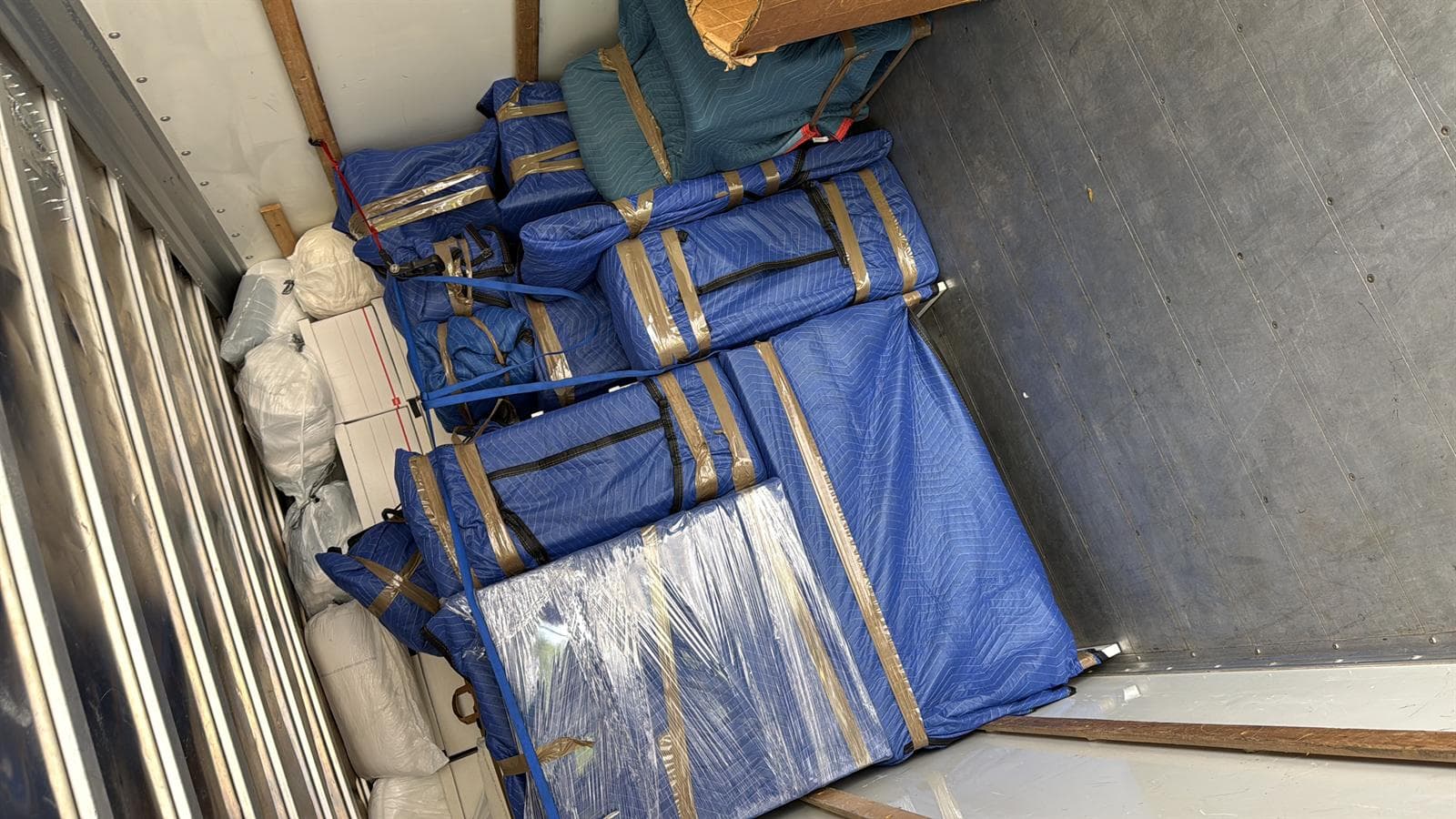
Professional Moving Services in Action
Everything You Get With Apartment & Condo Moving
What Apartment Renters Say About JH Moving
Real customers, real moves, real results.
Frequently Asked Questions
Most studio and 1-bedroom moves run 2–5 hours with a 2-person crew. A fuller 1-bedroom runs 4–7 hours. A 2-bedroom usually takes a 3-person crew and 5–8+ hours, depending on stairs, elevator access, parking distance, and how much is packed when we arrive. Bay Area apartment movers generally charge $140–$230 per hour depending on crew size. We bill hourly with a minimum, prorated in 15-minute increments, and pricing is explained upfront. California's double drive time rule means you pay for the drive between your old and new address, doubled, but never for travel to or from our yard. A $100 non-refundable deposit secures your date and applies to the final invoice. Call (510) 495-1884 for a free estimate.
You Might Also Need
Ready for a Stress-Free Apartment Move?
Get a free estimate today. No hidden fees, no surprises. Just honest pricing for your apartment move.
We have been moving Bay Area apartments for 7 years. 300+ five-star reviews. Licensed Cal-T201700. Fully insured.
Call (510) 495-1884 or request your free estimate online.
Serving the East Bay, Marin & San Francisco