Small Moves in the Bay Area
JH Moving handles small moves in Richmond and throughout the Bay Area. Studios, one-bedroom apartments, single rooms: if your move is on the smaller side, we have a crew and truck ready. Same licensed, insured service as our full-size moves, just sized to fit your job. Use the buttons below to get a free estimate.
Licensed & Insured
Cal-T201700
No Move Is Too Small
A lot of moving companies don't want your small move. It doesn't fit their minimum truck size, their crew availability, or their preferred job type. So they quote a number that makes no sense for a studio, or they just don't call back.
We built our small moves service specifically because small moves are a real need and most of the market either ignores them or hands them off to gig apps that send untrained helpers with no blankets, no floor protection, and no cargo insurance.
If you're moving a studio, a one-bedroom, a dorm room, or a few large pieces, we have you covered. Same licensed crew, same fully equipped truck, same professional service as any of our larger jobs, just sized for a smaller job and billed accordingly.
Every small move includes moving blankets, shrink wrap, tape, dollies, floor runners, and door jamb protectors. We protect your furniture and the building (floors, walls, door frames) even on short jobs. Furniture disassembly and reassembly is included in the hourly rate. Licensed under Cal-T201700 with full cargo and liability insurance. Small-move billing is hourly, typically with a 2 to 3 hour minimum and prorated 15-minute increments after. Pricing is explained upfront.
Need packing help? Add full-service packing and we box everything before we load.
How Your Small Move Works
-
Get your free estimate. Call (510) 495-1884 or fill out our online form. Tell us what you're moving, where it's going, and whether there are stairs, elevators, or tight parking at either end. You get an honest quote with a Not to Exceed price, no hidden fees, and a clear minimum policy in writing.
-
We show up and handle it. The crew arrives on time with all the equipment. We wrap your furniture, protect the building, load the truck, and drive to your new place.
-
You're settled. We unload, place everything where you want it, and reassemble what we took apart. Walk through with the crew lead and confirm everything looks right.
Why Small Moves Get Underserved (And Why That Matters for You)
Small moves are where most people end up with the wrong mover. It's not because small-move customers are less careful. It's because the market structure actively pushes small moves toward the wrong options.
Here's what happens. You search for help moving a studio or a few items. The first results are usually app-based platforms: Lugg, Dolly, TaskRabbit, and others that advertise "movers on demand" or "same-day movers." The pricing looks reasonable. The booking is fast. The friction is low. You book, someone shows up, and the job gets done, usually. Sometimes it doesn't, and when it doesn't, you learn what you actually bought.
Gig platforms aren't moving companies. They're technology platforms that connect customers with independent contractors who own a vehicle. The platform isn't the employer. The platform doesn't own the trucks. The platform doesn't carry cargo insurance on your belongings. The platform's terms of service typically cap their liability at something like $25 or $100, no matter what gets damaged. When your furniture arrives scratched or your hardwood gets gouged, you're not calling a manager at a moving company. You're filing a claim through a web form against a contractor you met for 90 minutes.
The equipment isn't guaranteed. A licensed moving company sends a truck equipped with blankets, shrink wrap, floor runners, corner guards, dollies, hand trucks, and the materials the crew needs for a real move. A gig worker shows up in whatever vehicle they own: sometimes a cargo van, sometimes a pickup truck, sometimes a box truck. The materials they bring depend on whether the individual contractor decided to stock them. Some do. Some don't. You find out when they arrive.
There's no California moving license behind the service. California law, through the Bureau of Household Goods and Services, requires any mover transporting household goods to hold a valid moving license (the Cal-T number). Licensed movers are subject to regulatory oversight, required to carry cargo insurance, required to give written estimates, required to provide a Not to Exceed price, and required to charge double drive time the way California specifies. Unlicensed operators aren't bound by any of it. Many gig platforms structure themselves as "delivery" or "labor" services specifically to avoid triggering the moving license requirement. But the moment a worker loads your furniture into a vehicle they drive to your new address, they're operating as a mover, license or not.
One scratch pays for the real mover. A gig helper saves you maybe $40–$80 on a small move. A damaged dresser costs $300 to replace. A gouged hardwood floor costs $400–$1,200 to refinish in a single room. A security deposit claim from a dinged doorframe or scraped wall can eat $200–$800. The math on small moves actually tilts more toward hiring a licensed professional, not less, because the savings are smaller and the failure cost is the same as a full-sized move.
Before hiring anyone for a small move, ask for a California moving license number and verify it through BHGS. Ours is Cal-T201700. You can read more about your protections on the California moving consumer rights page from BHGS.
The Minimum Billing Window, Explained Honestly
Almost every customer who calls for a small move has the same question in the first thirty seconds: "My move will only take an hour. Why is there a 2-3 hour minimum?"
It's a fair question and it deserves a real answer.
Every move, regardless of size, has fixed costs that happen before the first box moves. The crew has to load up at the yard, drive to your address, and drive back at the end of the day. The truck is committed to your job for the window it's booked. That means the truck can't be doing a second job at the same time. The estimate, the paperwork, the route planning, the COI issuance if your building needs one, the scheduling coordination: all of it happens for a 90-minute studio move the same way it happens for an 8-hour 3-bedroom move.
The minimum covers that fixed overhead. Without it, a licensed moving company literally can't afford to take small jobs. That's exactly why most of them don't, and why the market ends up dominated by gig platforms that don't have fixed overhead because they don't own trucks or carry cargo insurance.
Here's the honest version: if your move genuinely takes 90 minutes and the minimum is 3 hours, you're paying for 90 minutes of the crew's billable time that the minimum covers anyway. That feels wrong in the moment, but what you're actually paying for is access to a licensed crew and a proper truck for a small job the rest of the industry ignores. Compared to the cost of a damaged piece or a lost security deposit, it's almost always the right trade.
Two things to ask any mover before you book:
-
What's the exact minimum? Get it in writing on the estimate. 2-hour and 3-hour minimums are both common. 4-hour minimums exist too. Know what you're signing.
-
How does prorating work after the minimum? Most reputable movers go to 15-minute increments after the minimum is met. Some round up to the nearest half-hour or full hour, which can add up on a move that finishes at 3:10 PM. Ask specifically.
For very small jobs (a single piece, a few items, a same-building move where the minimum would be a real mismatch), our single-item moving service is usually the better fit. Same licensed crew, same equipment, built for the single-piece or few-piece scope.
What Counts as a Small Move
If you're not sure whether your move qualifies, here's a rough guide:
-
Studios and single rooms. Bed, dresser, couch, kitchen items, and boxes. These moves typically run 2 to 4 hours with a 2-person crew, depending on stairs and access. The most common small-move shape.
-
One-bedroom apartments. Usually 3 to 6 hours depending on how packed the home is, floor level, and distance from door to truck. Still a small move, often a borderline call on whether 2 movers or 3 makes more sense.
-
Single items or a few large pieces. A couch, a mattress, a dining table, or a dresser that needs to move across town. Our single-item moving service is built for this specific case.
-
Dorm rooms and student moves. Same crew, same equipment. If you're moving in or out of UC Berkeley, UCSF, USF, SFSU, or any campus housing in the region, we know the move-in windows and parking restrictions. See our college moving service for more on student moves.
-
Partial household moves. You've already moved some things yourself and need help with the remaining heavy pieces: the bed, the couch, the appliances. This is a small move too.
If your move is larger, our apartment moving service and local moving service cover 2-bedrooms and up.
What to Ask Before Booking Any Small Mover
The difference between a licensed small move and a gig-worker small move comes down to questions most people don't think to ask until after something goes wrong. Here's the short list worth running through with anyone you're considering:
"What's your California moving license number?" A legitimate mover answers with a Cal-T number without hesitating. No number, no hire. Verify it through BHGS before you book. It takes 30 seconds.
"What's included in the hourly rate, and what's a paid add-on?" Blankets, shrink wrap, tape, dollies, floor runners, and basic crew tools should be included. Wardrobe boxes and TV boxes should come with the move. Packing paper, bubble wrap, dish boxes, and additional cartons are typically paid add-ons. But they should be priced in the estimate, not added to the final invoice as a surprise.
"What's the minimum, and how does prorating work after?" Covered above. Get both in writing.
"Do you carry cargo insurance on my belongings?" Licensed movers do, by law. Basic coverage is $0.60 per pound, which is low. For context, a 50-lb TV is covered at $30 under basic liability. Upgraded valuation coverage is worth asking about if you own anything where replacement cost significantly exceeds $0.60/lb. Gig platforms typically don't carry cargo insurance at all.
"Will the estimate be written, and will it include a Not to Exceed price?" California law requires both on any binding local move estimate. A mover who gives you a phone-only quote and no written estimate is not operating legally.
"Is the crew employed by you or subcontracted?" Licensed moving companies with employees have worker's comp, trained crews, and direct accountability. Gig-platform contractors are independent and often have neither.
If the answers to any of these questions are evasive, vague, or require a second phone call to get, that's your answer about whether to book.
Small Moves We Do Every Week
Most of our small moves fall into a handful of patterns.
Studios and 1-bedrooms in older East Bay buildings. Walk-ups in Oakland's Temescal, Adams Point, and Grand Lake, Craftsman flats in Berkeley's Southside and Elmwood, and similar older building stock in Alameda, Albany, and El Cerrito. These moves have narrow doorways, tight stairwells, and permit-zone parking. That's exactly why a licensed crew with the right materials matters more than the gig-worker alternative. The job is small, but the building is not forgiving.
Cross-bay studio moves. Someone moving from a studio in SF's Mission, Haight, Richmond District, or Sunset into a 1-bedroom in the East Bay, or vice versa. Bridge timing, parking permits at the SF end, and narrow Victorian stairwells are all part of the day. Small moves across the Bay Bridge or the Richmond–San Rafael Bridge still carry California double drive time on the actual route, which gets factored into the estimate.
Student moves. UC Berkeley studios turning over in late August and mid-May, UCSF grad students moving into Mission Bay or Inner Sunset housing, USF and SFSU students coming and going. Most student moves are genuinely small (a bed, a desk, a few boxes, a fridge), and they benefit the most from a proper crew because campus move-in windows are tight and the buildings don't flex. See our dedicated college moving service for more on student moves.
Move-ins to newer mid-rise buildings. Emeryville along Bay Street and the Hollis corridor, downtown Walnut Creek near BART, newer complexes in Alameda Landing and Bay Farm. These buildings have freight elevator reservations, loading dock windows, and COI requirements that gig workers generally can't meet. Property management won't let an uninsured contractor through the lobby. A licensed crew with the paperwork and the insurance is often the only option that actually gets the job done.
Partial moves and downsizing. Someone who's moved most of their stuff themselves and needs help with the heavy pieces: the king mattress, the sectional, the oak dresser, the fridge. These are small moves by volume but often the hardest physical part of the whole relocation.
What to Do Now
- Call or fill out the online form for a free estimate. Give us the inventory, both addresses, floor levels, stairs, and parking. The more specific you are, the tighter the estimate.
- Ask for the minimum and prorating policy in writing.
- Confirm the license number before booking. Ours is Cal-T201700, verifiable through the BHGS license search tool.
- Pull a parking permit if you're moving in San Francisco. SFMTA needs 5 business days.
- Separate anything not moving before the crew arrives so it doesn't end up on the truck.
Moving just a couch or a mattress? Our single-item moving service is built for that. Moving a full studio or 1-bedroom? You're on the right page.
See everything we offer on our moving services page or get your free estimate today.
Get a Free Estimate
Call us or fill out our form for an honest quote with no hidden fees.
(510) 495-1884Or fill out our formWhy JH Moving
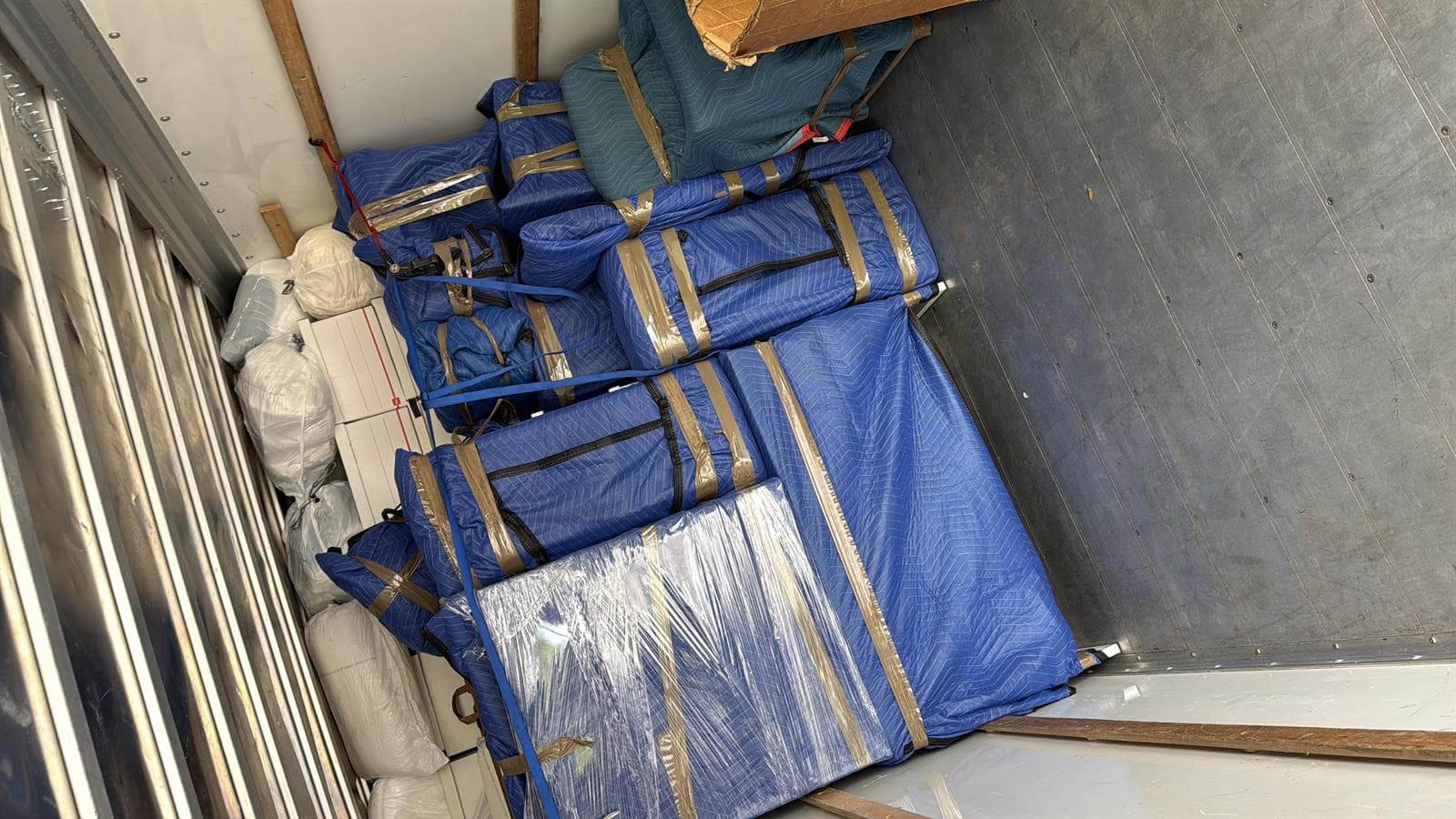
Professional Moving Services in Action
Everything You Get With Small Moves & Studio Moving
What Customers Say About Our Small Moves & Studio Moving
Real customers, real moves, real results.
Frequently Asked Questions
Small moves are billed hourly, and most movers use a 2 to 4 hour minimum depending on their policy. Pricing is explained upfront before any work starts, and every estimate includes a written Not to Exceed price: the legal maximum you can be charged for the move as scoped. Most studios run 2 to 4 hours with a 2-person crew. One-bedrooms typically run 3 to 6 hours depending on access, stairs, and packing status. Each additional mover adds roughly $50 to $70 per hour. California double drive time applies as required by state regulation and is explained upfront. A $100 non-refundable deposit secures your date and applies to the final invoice. Call (510) 495-1884 for a free estimate.
You Might Also Need
Ready for a Small Move Done Right?
Call the licensed crew that shows up with the right truck, the right materials, and the insurance to back the work. One crew, one call, one invoice.
Licensed Cal-T201700. 300+ five-star reviews. Family-owned and based in Richmond for 7 years.
Call (510) 495-1884 or request your free estimate online.
Serving the East Bay, Marin & San Francisco