Local Moving in the Bay Area
JH Moving provides local residential moving services across the Bay Area. Whether you're moving across town, across the bridge, or into a new neighborhood in Oakland, Berkeley, San Francisco, Walnut Creek, Alameda, or beyond, our licensed crews handle the heavy lifting and explain pricing upfront before the job starts.
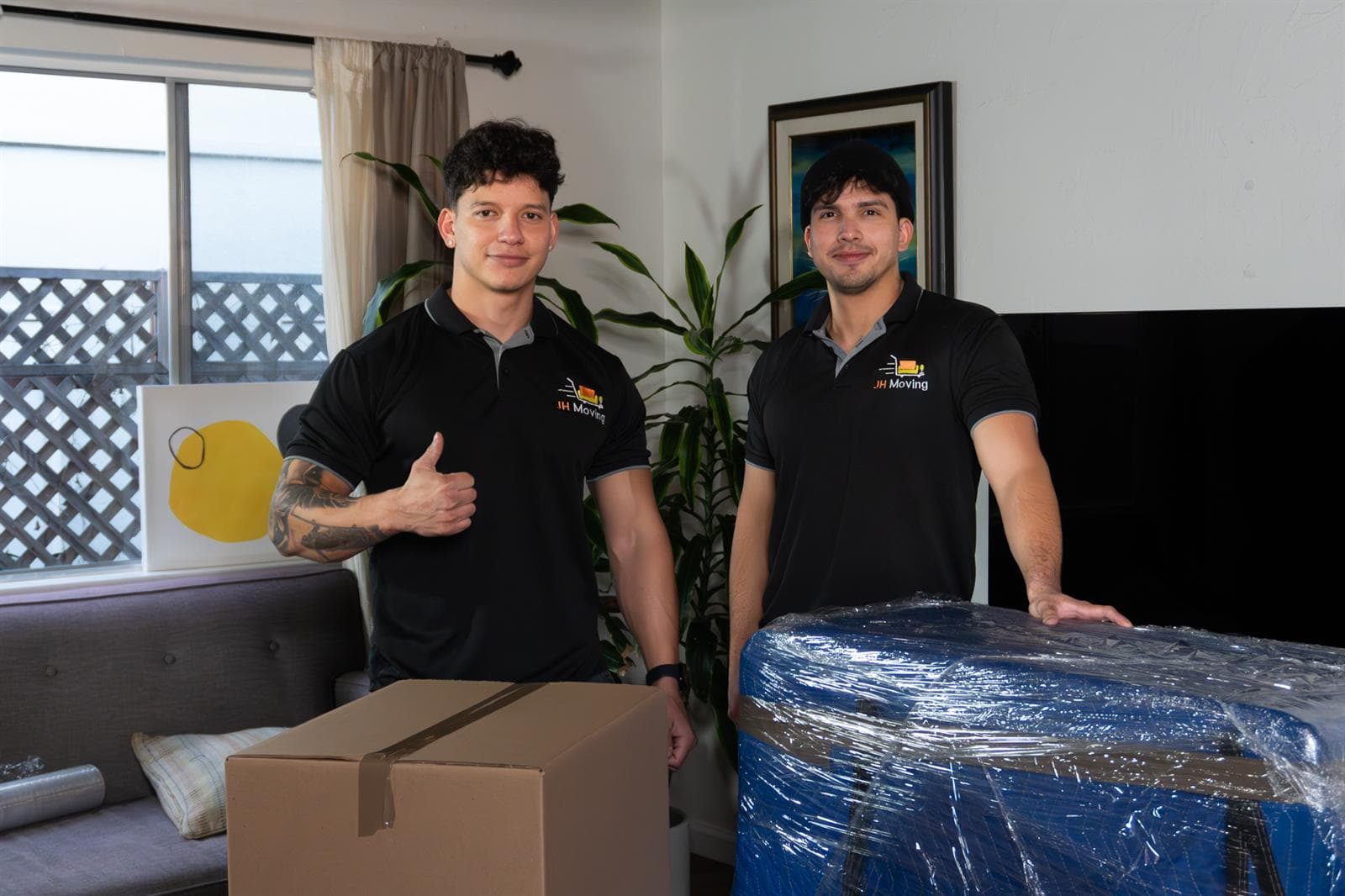
Licensed & Insured
Cal-T201700
What Counts as a Local Move
Under California law, a local move is any move under 100 miles between your origin and destination. That covers almost everything we do: a studio going three blocks over in Berkeley, a 3-bedroom in Walnut Creek heading to Oakland, a cross-bay move from Richmond to San Francisco, or a family relocating from Alameda to Marin. Local moves are billed hourly. Anything over 100 miles flips into long-distance pricing, which is weight-based and works differently.
Most of the time, the question isn't whether your move is local. It's what's going to make it take more or fewer hours. That's what actually determines the bill.
How Local Moving Works
-
Get your free estimate. Call (510) 495-1884 or fill out our online form. Tell us what you are moving, where you are going, and when. We give you an honest quote with no hidden fees and recommend the right crew size before anything is booked. California law requires moving estimates to be based on an in-person or video walkthrough. Phone-only quotes aren't enforceable, which is why reputable movers won't give a binding number without seeing the inventory.
-
We show up and handle it. The crew arrives on time with everything they need. We wrap your furniture, protect your floors, load the truck, and drive to your new place.
-
You are home. We unload, place furniture where you want it, and reassemble anything we took apart. Walk through your new space and make sure everything looks right before we leave.
The Real Cost Driver Is Crew Size, Not Hourly Rate
The most common mistake people make comparing movers is picking the crew with the lowest hourly rate. On paper it looks like savings. On move day it almost always costs more.
Here's how the math actually works. Say you're moving a 2-bedroom with a full house of furniture on the second floor, and the truck has to stage 50 feet from the front door. Two movers at $150/hour is cheaper per hour than three movers at $200/hour, so the lower number looks better. But two movers on that job means one person carrying and one person spotting on every trip up and down the stairs. The truck sits empty between loads because there's nobody free to stage, and every heavy piece takes two people to control safely through the doorway and up the turn. That move takes 8 hours with two movers. With three movers, it takes 5. Two people on the stairs, one staging and loading, the truck is never idle, and the clock stops earlier.
Run the numbers: 8 hours x $150 = $1,200. 5 hours x $200 = $1,000. The "more expensive" crew saves you $200 on the same job.
This pattern holds for almost every move over a 1-bedroom. Adding a third mover costs roughly $50 more per hour but typically cuts total hours by 30 to 40 percent, especially once stairs, long carries, or heavier furniture are involved. On a studio with a truck at the curb and no stairs, two movers is the right call. On a 2-bedroom walk-up in Oakland's Adams Point or a 3-bedroom with a long driveway in Orinda, two movers is a long, expensive day that three movers would have finished earlier and cheaper.
When you call for your estimate, we ask about floor level, stair count, parking distance, and heavy items (pianos, gun safes, peloton, treadmills, sectionals) specifically because those factors determine crew size. We recommend the crew that makes the most financial sense for the job, not the smallest one. Hourly rate alone isn't the price. Total hours times hourly rate is.
Double Drive Time, Explained
Double drive time (DDT) is one of the most confusing line items on a moving bill, and it's also one of the things customers get most suspicious about when they see it. It looks like a surcharge. It isn't. It's a California law, and it actually protects you.
Before California regulated moving in the 1990s, movers would start the clock when the truck left their warehouse and stop it when the truck got back. If your movers were based in Hayward and you were moving Berkeley to Oakland, you were paying for the round-trip from Hayward to Berkeley to Oakland to Hayward. Two hours of billed driving for 40 minutes of actual work between your addresses. The system was rigged toward companies with inconveniently located warehouses.
The fix was Max Rate Tariff 4, the rulebook every licensed California mover operates under. Under DDT, the clock works differently:
- You never pay for the drive from the warehouse to your first address. That's the mover's overhead.
- You never pay for the drive from your second address back to the warehouse. Same reason.
- You pay for the drive between your two addresses, doubled. If it's 20 minutes from origin to destination, you're billed for 40 minutes.
The doubling is how California compensates the mover for both directions in one line item without letting them run the clock from the warehouse. On your bill it shows up as a separate DDT entry, usually under an hour. A Berkeley-to-Oakland move has maybe 20 to 30 minutes of DDT. A Richmond-to-SF move across the Bay Bridge during midday traffic might be 90 minutes of DDT. A Hercules-to-Walnut Creek move runs somewhere in between.
The rule applies to every licensed local move under 100 miles in California. A mover who doesn't charge DDT is almost always unlicensed. DDT is required by law, and operating without it is one of the signals BHGS uses to identify unlicensed operators. A mover who charges you for the drive to your home from the warehouse is violating the rule and overcharging you.
If you want to verify the rule yourself, it's spelled out in the Max Rate Tariff 4. The DDT provisions are in Item 210.
Access, Readiness, and Hours on the Clock
Two homes of the same size are rarely the same job. What changes the clock is mostly access and readiness, plus crew size (which we covered above).
Access: Stairs, especially narrow flights in older buildings; a long walk from the door to where the truck can park; elevator waits or freight reservations; and tight hallways. All of that adds trips and minutes. Cross-bay timing matters too; heavy traffic shows up in drive time the way California regulates it (DDT above), which is why start windows matter.
Readiness: Sealed, labeled boxes; empty dresser and file drawers; beds or desks disassembled where you can manage it; donate-or-stay piles clearly separated from what is loading; a rough plan for where furniture lands so nothing heavy gets placed twice. Sort parking permits, loading rules, and curb space before move day. When the crew is waiting on logistics, that time is on the clock.
Standard furniture disassembly and reassembly are included, but the minutes still count. If you are still packing when we arrive, or we are working around full closets and mystery piles, the day runs longer than the estimate assumed.
End-of-month and peak weekends book out fast in the Bay Area; midweek often means less fighting for elevators and loading docks.
If you would rather skip packing and last-minute disassembly altogether, add full-service packing before move day so the moving crew can stay in one continuous rhythm: one licensed crew, start to finish.
Moving a single room or a few pieces? See small moves. Pairing local moving with specialty work? Browse all moving services. Before you hire anyone, verify their license with BHGS (ours is Cal-T201700).
Get a Free Estimate
Call us or fill out our form for an honest quote with no hidden fees.
(510) 495-1884Or fill out our formWhy JH Moving
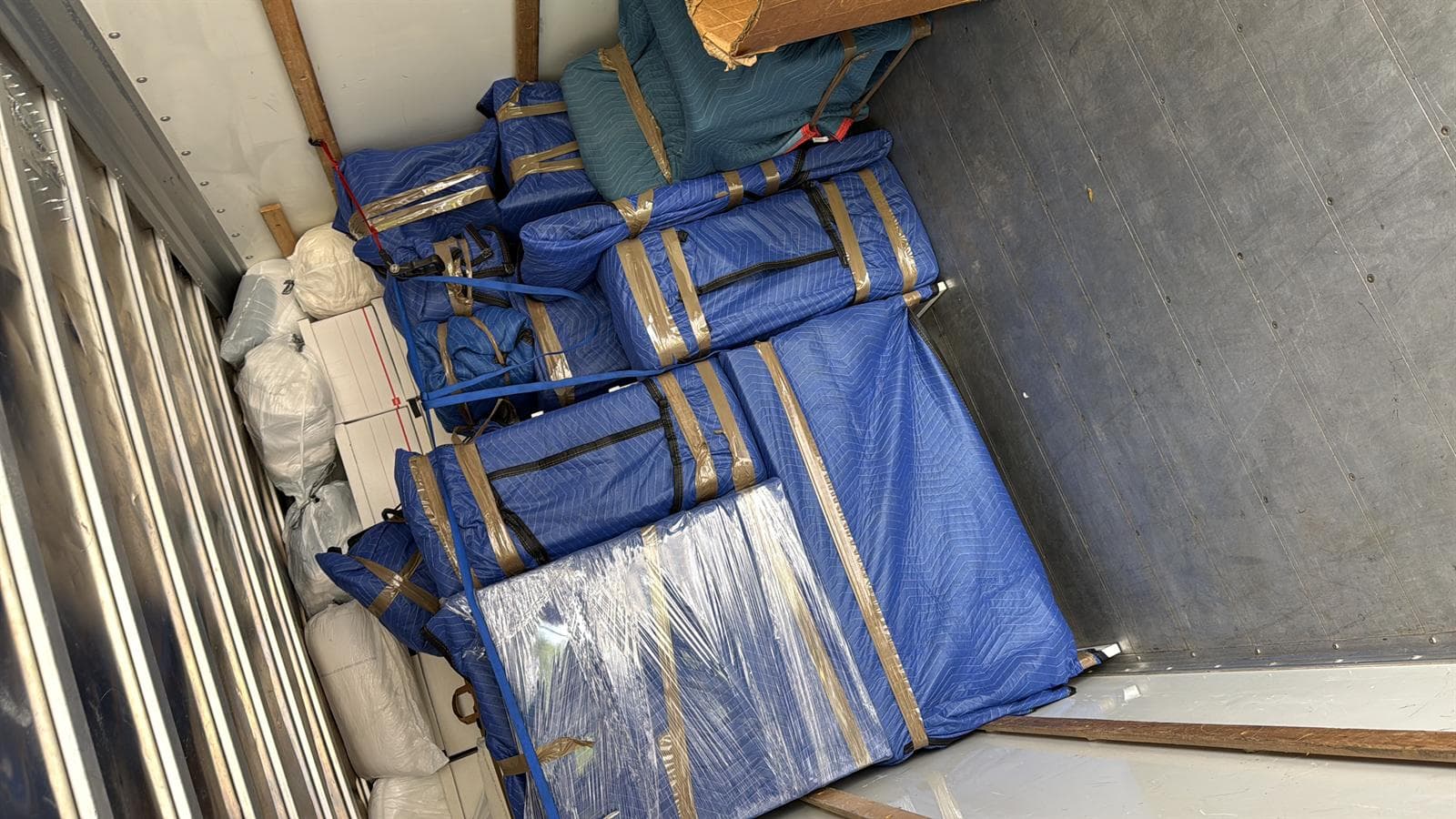
Professional Moving Services in Action
Everything You Get With Local Residential Moving
What Customers Say About Our Local Moving
Real customers, real moves, real results.
Frequently Asked Questions
Most local moves in the Bay Area start between $140 and $200 per hour for 2 movers. Each additional mover adds roughly $50 to $70 per hour. Adding movers costs more per hour but often reduces total hours enough that the final bill comes out the same or lower, especially on larger homes or jobs with stairs. The hourly rate covers the crew, the truck, and move-day materials. Rates, minimums, and what affects the final total are explained upfront. A $100 non-refundable deposit secures your date and applies to the final invoice. Call (510) 495-1884 for a free estimate and crew size recommendation based on your specific move.
You Might Also Need
Ready for a Local Move in the Bay Area?
You have enough on your plate. Our crews move Bay Area families every day from studios to large homes and we size the crew to the job before anyone shows up.
Licensed under Cal-T201700 with 300+ five-star reviews. We show up on time, explain pricing upfront, and treat your belongings with care.
Your move. Our crew. Let's go.
Serving Richmond, Oakland, Berkeley, and the entire Bay Area