Senior Moving Services in Richmond, CA
JH Moving provides patient, respectful moving services for seniors in Richmond and throughout the Bay Area. Whether you or your parent is downsizing in Walnut Creek, moving to assisted living in Concord, or relocating closer to family in Oakland, our crews work at your pace and set up your new home so it feels livable on day one. Use the buttons below to get a free estimate.

Licensed & Insured
Cal-T201700
What Makes a Senior Move Different
A senior move is not just a smaller move. It's a life change, and the operational reality of the day reflects that.
The person leaving the home has often lived there 20, 30, or 40 years. Every piece of furniture carries a memory. Every decision about what stays and what goes is emotional. The timeline is rarely simple: health changes, family conversations, and care facility availability all shape when and how the move happens. And on move day, the person moving is often tired, overwhelmed, and watching the life they built get packed into boxes.
Moving at this stage deserves a different kind of care than a 28-year-old moving apartments. We don't rush. We don't stand around looking impatient while someone decides which photo albums to keep. We work at the pace the person moving can handle, take breaks when they need breaks, and treat the home they're leaving with the respect it deserves.
Every move includes blankets, shrink wrap, tape, and crew tools, plus up to 2 TV boxes and 5 wardrobe boxes. Packing paper, bubble wrap, dish boxes, and additional materials are part of our paid packing service, quoted upfront. Furniture gets blanket-wrapped, disassembled where needed, and reassembled at the new home. Licensed under Cal-T201700 with full cargo and liability insurance. Every estimate includes a written Not to Exceed price.
How Your Senior Move Works
-
Get your free estimate. Call (510) 495-1884 or fill out our online form. Tell us about the home size, what needs packing, where the move is going, and whether a senior move manager is involved. We give you an honest quote with no hidden fees and a Not to Exceed price.
-
We plan the move around the person, not the clock. For anything larger than a 1-bedroom move, we usually recommend packing on a separate day from moving. That spreads the work across two shorter days instead of one long one, which is easier on everyone: the crew, the family, and especially the person moving.
-
We show up and work at a pace that makes sense. The crew arrives on time with a fully equipped truck. Sentimental items get extra protection. If your parent needs a break, we take a break. If they want to be involved in decisions about what goes where, they're involved. If they'd rather sit in the living room with a cup of tea and let the crew work, that's fine too.
-
You walk into a home that feels like home. We don't drop boxes in the garage and leave. Furniture goes where you want it, the bed gets set up and made, the bathroom is stocked, and the kitchen is unpacked enough to make a meal. The first night in a new place should feel settled, not overwhelming.
Downsizing: The Floor-Plan Math
The single biggest operational reality of most senior moves is downsizing: moving from a family home into something smaller. A 3-bedroom house in Walnut Creek or Oakland into a 2-bedroom Rossmoor condo. A longtime home in Richmond Annex into an assisted living apartment at Oakmont of Concord. A Marin family home into Smith Ranch Homes.
The math is unavoidable: what fit in a 2,400 square foot home doesn't fit in a 900 square foot apartment. The question is figuring out what does fit, making those decisions before move day rather than during, and getting the furniture that's making the move to land in the right spots at the new place.
Here's the process that works:
Get the floor plan with dimensions from the new community. Rossmoor, Oakmont, Aldersly, Smith Ranch Homes, and most assisted living facilities will provide a floor plan for the specific unit with room dimensions marked. Ask for it as soon as the unit is confirmed. If they only have a generic floor plan, ask whether there's a dimensioned version: for the decisions you're about to make, inches matter.
Measure the large pieces at the current home. The sofa, the dining table, the bed frame, the primary dresser, the china cabinet, the desk. Not every piece: just the ones that might not fit. Length, width, height, and for anything that needs to go through a doorway, the diagonal too (a 7-foot sofa on a 34-inch-wide couch might be 7'4" on the diagonal, which matters for turning through doorways).
Lay it out on paper. Graph paper with a scale (1 square = 6 inches works) or a free floor plan app. Cut out scaled rectangles for each piece and move them around on the floor plan. This takes 30 minutes and prevents a very specific move-day disaster: the dining table that's 6 inches too wide to fit between the kitchen and the dining area wall.
Decide before move day what's not making the trip. Whatever doesn't fit needs a plan: passed to a family member, sold, donated, or moved to storage. Each option has a different lead time. Estate sales need weeks. Donation pickups from Goodwill or Habitat for Humanity typically need a few days' scheduling. Family members picking up pieces need time to coordinate trucks or shipping.
On move day, we only move what's making the trip. Pieces set aside for donation, storage, or family pickup get clearly marked so we don't load them. This sounds obvious but is the single most common source of wasted time and confusion on senior moves: unclear lines between what's moving, what's staying, and what's going somewhere else.
If this process feels overwhelming (and it often is, especially when the person moving has health concerns or the family is coordinating from out of state), this is exactly what a senior move manager is for.
Working with a Senior Move Manager (And What That Actually Looks Like)
Senior move managers (SMMs) are a distinct profession from movers, and the distinction matters. Most families learn about SMMs somewhere in the middle of planning a difficult move and aren't sure exactly what they do, whether they need one, or how working with one affects the mover they hire.
Here's the short version. A senior move manager handles everything around the physical move: the sorting, deciding, planning, and overseeing. A mover handles the physical move itself: packing, loading, transporting, unloading, setting up. They're complementary, not redundant.
What a senior move manager typically does:
- Works with the person moving (and often the family) to sort through belongings and decide what stays, what goes, and where the things that aren't moving go
- Creates a detailed floor plan for the new home showing where each piece of furniture will land
- Coordinates donations, estate sales, consignments, auctions, and disposal of items not making the move
- Supervises the movers on move day and directs placement at the new home
- Handles unpacking and setup at the new home, including making the bed, stocking the bathroom, and putting the kitchen in order
- Manages the emotional side of the transition, which is often the hardest part
- Coordinates with the retirement community or facility on move-in procedures
What a senior move manager usually doesn't do:
- Physically move furniture or boxes (most SMMs don't have trucks or crews)
- Handle heavy lifting or anything requiring professional moving equipment
- Cover the move under moving-specific cargo insurance
How we work with SMMs. When a senior move manager is involved in a move, they typically handle the planning and we handle the execution. Before move day, the SMM tells us what's moving, what the floor plan at the new home looks like, and any specific pieces that need particular attention. On move day, the SMM is often on site at one or both ends, directing placement and managing decisions that come up. After the crew leaves, the SMM handles unpacking, organizing, and the settling-in work that transforms a unit full of boxes into a home.
When an SMM is worth hiring. For moves involving significant downsizing (3-bedroom home into a 1-bedroom apartment, or anything similar in scale), coordination with out-of-state family members, a move happening under time pressure from a health change, or a situation where the person moving can't physically or emotionally handle the decision-making process alone, an SMM is usually worth every dollar. The National Association of Senior & Specialty Move Managers maintains a search tool that lets you find accredited SMMs in the Bay Area.
When you probably don't need one. If the move is relatively simple (moving from one house to a similar-sized house, downsizing modestly, and the family has the time and capacity to handle the planning themselves), a good mover plus family coordination is often enough.
We work with senior move managers regularly and are used to coordinating with them. If you're not sure whether you need one, call us and describe the situation. We'll give you an honest read on whether an SMM would help or whether what you need is just a good crew.
Rossmoor, Oakmont, and Bay Area 55+ Community Move-In Logistics
Retirement communities and assisted living facilities have their own move-in protocols, and they enforce them. Moving into one of these communities without knowing the rules is how moves get turned away at the gate or delayed into the next day.
Rossmoor (Walnut Creek). Rossmoor is the largest 55+ community on the West Coast: roughly 9,000–10,000 residents across 1,800 acres, with co-ops, condos, single-family homes, and congregate living at The Waterford. Access is through the gate at the main entrance; trucks need to be on the community's approved list and the move-in coordinated through the community's procedures. Many units are in buildings with shared hallways and elevators where move-in windows and elevator pads apply. The terrain is hilly and some buildings have narrow access roads where larger moving trucks need to stage carefully. For moves into Rossmoor, we coordinate with the community's management and your Mutual's specific procedures before move day. Bring those requirements to your estimate and we'll build the plan around them.
Oakmont of Concord, Oakmont of Walnut Creek, and similar Oakmont communities. Assisted living and memory care facilities with structured move-in procedures. Elevator reservations, loading dock schedules, and defined move-in hours are standard. Many Oakmont communities require a Certificate of Insurance from the moving company before move day.
Smith Ranch Homes (San Rafael). A Marin community with hillside access and its own move-in protocols. Hillside driveways and narrow approach roads are common; truck staging often requires planning.
Aldersly (San Rafael). A Lutheran retirement community with specific move-in procedures, elevator reservations for the main building, and a coordinator who handles move-in logistics with residents and movers.
Independent assisted living facilities across the East Bay and Marin. Smaller facilities vary widely in their procedures. Some have full-service move-in coordinators; some expect the family to handle everything. Ask the facility as soon as your move date is confirmed what their procedures are: elevator access, move hours, COI requirements, parking for the truck, elevator pad deposits, any required deposits or paperwork.
For any 55+ community or assisted living move, the single most useful thing you can do at booking is email the community's move-in coordinator (or front office) and ask for their moving requirements in writing. Forward that document to us with your estimate. Everything else follows from there.
The Urgent Move Scenario
Not every senior move is planned three months out. A significant portion of the senior moves we do happen on days-not-weeks timelines because something changed unexpectedly.
A hospitalization makes it clear that staying alone isn't safe anymore. A spot opens up at a facility that's been on a waiting list for months. A fall or a diagnosis accelerates the timeline. A family member flies in from out of state and realizes the situation is worse than they understood.
Urgent senior moves are different from planned ones, and they need a different approach:
Focus on the essentials first. In an urgent move, the goal isn't unpacking every box on day one: it's making sure the person moving has a livable setup for day one. That means the bed, the bathroom (medications, toiletries, towels), a few favorite pieces, clothes for the week, and enough kitchen setup for basic meals. Everything else can unpack over the following week.
Leave non-essentials for a second phase. If the move has to happen fast, some decisions about what stays and what goes can't be made in time. Items going to storage, items going to family members, items for donation: all of this can often wait. The old home or the adult children's home can hold things for a few weeks while the dust settles.
Communicate changes as they happen. In urgent moves, the situation on the ground often shifts: the facility changes the move-in date, a family member can or can't be there, the health situation evolves. Tell us what's changing and we'll adjust.
Don't try to solve everything at once. The goal is getting the person settled safely in the new place. The rest of the coordination (selling the family home, handling the donations, wrapping up the old life) can happen in the weeks after, at a calmer pace.
If you're facing an urgent senior move, call us and explain the situation. We'll tell you what we can do, on what timeline, for what scope.
For the Family Coordinating the Move
If you're the one organizing this move for a parent or loved one, you already have a lot on your plate. Between managing the emotions of the transition, coordinating with facilities, potentially working remotely or from out of state, and handling the logistics, the last thing you need is a moving crew that adds stress instead of removing it.
Here's what helps most:
Give yourself more time than feels necessary. Senior moves almost always take longer to plan than typical residential moves. Decisions about what to keep and what to let go take time, and compressing that process under a hard deadline is what leads to regret later. If you can start planning 2–3 months ahead, do it.
Separate the sorting from the packing. Deciding what goes and physically packing it are two different tasks. If possible, spend time going through the home before any packing day so the packing itself is focused on moving forward, not making hard decisions under pressure.
Coordinate with the facility early. Ask the facility for move-in procedures, elevator reservations, parking, loading dock access, COI requirements, and any deposits. Get these in writing. Forward them to us when you book.
Consider a senior move manager. For moves involving significant downsizing or coordination from out of state, an SMM is often the difference between a difficult move and an impossible one. See the section above on what they do and how we work with them.
Coordinate with us directly, or let the SMM coordinate. Either works. Some families want one point of contact (usually the SMM if there is one); others want to handle the mover conversation directly. Tell us what works for your family and we'll adjust.
Take care of yourself in the process. The adult child coordinating a parent's move is often running on empty by the time move day arrives. The move itself should be the least stressful part of the process. That's what you're hiring us for.
Senior Moves We Do Every Week
Most of our senior moves fall into a handful of patterns.
Family home in the East Bay into Rossmoor. The most common senior move pattern we see: parents downsizing from a 2- or 3-bedroom home in Walnut Creek, Lafayette, Orinda, Oakland, or Alameda into a Rossmoor condo. Usually involves serious downsizing, gate-entry coordination, and careful placement at the new home. Often coordinated by an adult child.
East Bay home into assisted living in Concord or Walnut Creek. Moves into Oakmont of Concord, Oakmont of Walnut Creek, and similar facilities. Usually on shorter timelines than Rossmoor moves, often with health-change urgency. Typically a 2-bedroom or smaller footprint at the new home.
Marin family home into Marin senior communities. Moves into Smith Ranch Homes, Aldersly, and other Marin retirement communities. Hillside access, established family homes with 30+ years of accumulated belongings, and longer drives into Marin from the East Bay.
Oakland family home to closer-to-family location. Moves from Rockridge, Montclair, the Laurel District, or other Oakland neighborhoods into senior communities or adult children's homes elsewhere in the Bay Area. Often involves serious downsizing.
Aging in place reshuffles. Not every senior move is into a facility. Some are parents moving in with an adult child's family, downsizing into an ADU on the family property, or moving from a multi-story home into a single-story home to avoid stairs. These moves have their own patterns and usually benefit from the same patient, setup-oriented approach.
Urgent health-change moves. Days-not-weeks moves triggered by hospitalizations, falls, or sudden facility availability. The essentials-first approach described above.
If you or your loved one lives in Richmond, the city offers resources through Richmond Senior Services including community programs and support services to help with the transition.
For pieces that need extra care (antiques, heirloom furniture, artwork), ask about our white glove moving service.
What to Do Now
- Call or fill out the online form for a free estimate. Tell us the home size, the destination, the timeline, and whether a senior move manager is involved.
- Get the floor plan and dimensions for the new unit. Start comparing what fits before you commit to what moves.
- Contact the community or facility for move-in procedures, elevator reservations, COI requirements, and any deposits. Get it in writing.
- Consider whether a senior move manager would help. If the downsizing is significant or the family is coordinating from out of state, probably yes.
- Decide what's not making the move. Arrange donations, family pickups, estate sales, or storage for items staying behind.
- Handle appliance disconnects at the old home before move day. The reconnect at the new home happens after we leave.
Before hiring any mover, verify their California moving license through the BHGS license search tool. Our license number is Cal-T201700.
See all our moving services or get a free estimate today.
Get a Free Estimate
Call us or fill out our form for an honest quote with no hidden fees.
(510) 495-1884Or fill out our formWhy JH Moving
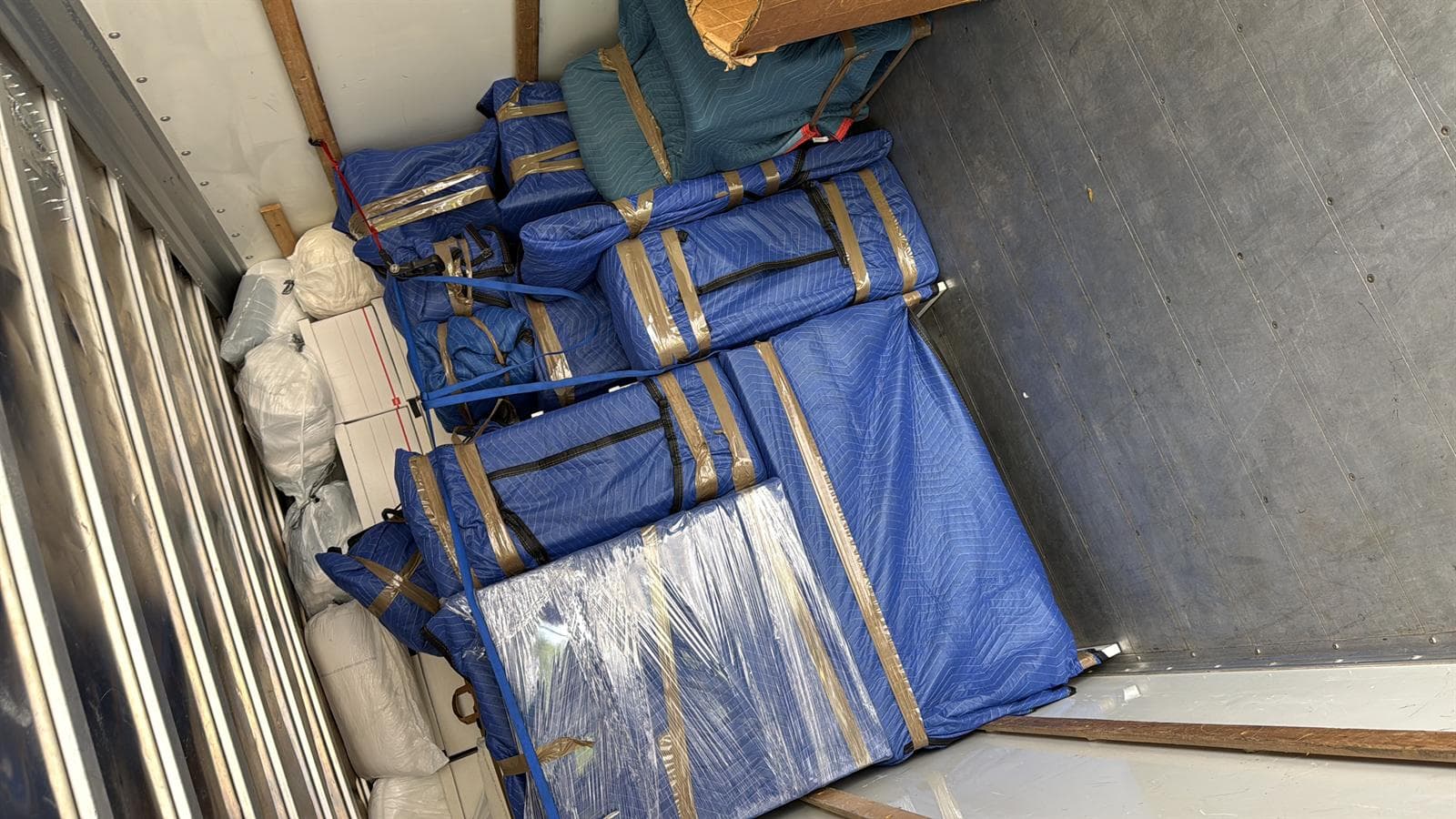
Professional Moving Services in Action
Everything You Get With Senior Moving Services
What Families Say About Our Senior Moving Services
Real customers, real moves, real results.
Frequently Asked Questions
Senior moves are billed hourly with a minimum, and pricing is explained upfront before any work starts. Every estimate includes a written Not to Exceed price: the legal maximum you can be charged for the move as scoped. A typical downsizing move from a 2-bedroom home runs 5–9 hours with a 3-person crew depending on access, stairs, and how much packing is needed. A full 3-bedroom family home into a 1-bedroom assisted living apartment or a Rossmoor condo typically runs 7–12 hours and often benefits from a 4-person crew, especially when unpacking at the new home is part of the job. Each additional mover adds roughly $50–$70 per hour. California double drive time applies as required by state regulation. A $100 non-refundable deposit secures your date and applies to the final invoice. Call (510) 495-1884 for a free estimate.
You Might Also Need
Ready for a Patient, Respectful Move in the Bay Area?
Your timeline, your pace. One call gets you a crew that treats your parent's belongings like family heirlooms, because that is exactly what they are.
Licensed Cal-T201700. 300+ five-star reviews. Family-owned and based in Richmond.
A move done right. No rush, no stress.
Serving the East Bay & Greater Bay Area