White Glove Moving in the Bay Area
JH Moving provides white glove moving services in Richmond and across the Bay Area. Whether you own a hillside estate in Orinda, a custom-furnished home in Walnut Creek, or a Victorian in San Francisco, our crew handles every item with the care it deserves. Use the buttons below to get a free estimate.
Licensed & Insured
Cal-T201700
Moving Done the Right Way
Some people want their move handled correctly from start to finish. Not just transported, but properly planned, individually wrapped, carefully loaded, deliberately placed, and fully set up at the new home. If that's what you're looking for, this is the service.
White glove moving isn't a standard move with a higher price tag. It's a different level of care at every step, built around the kind of inventory where damage isn't just an inconvenience. It's a loss you can't simply replace.
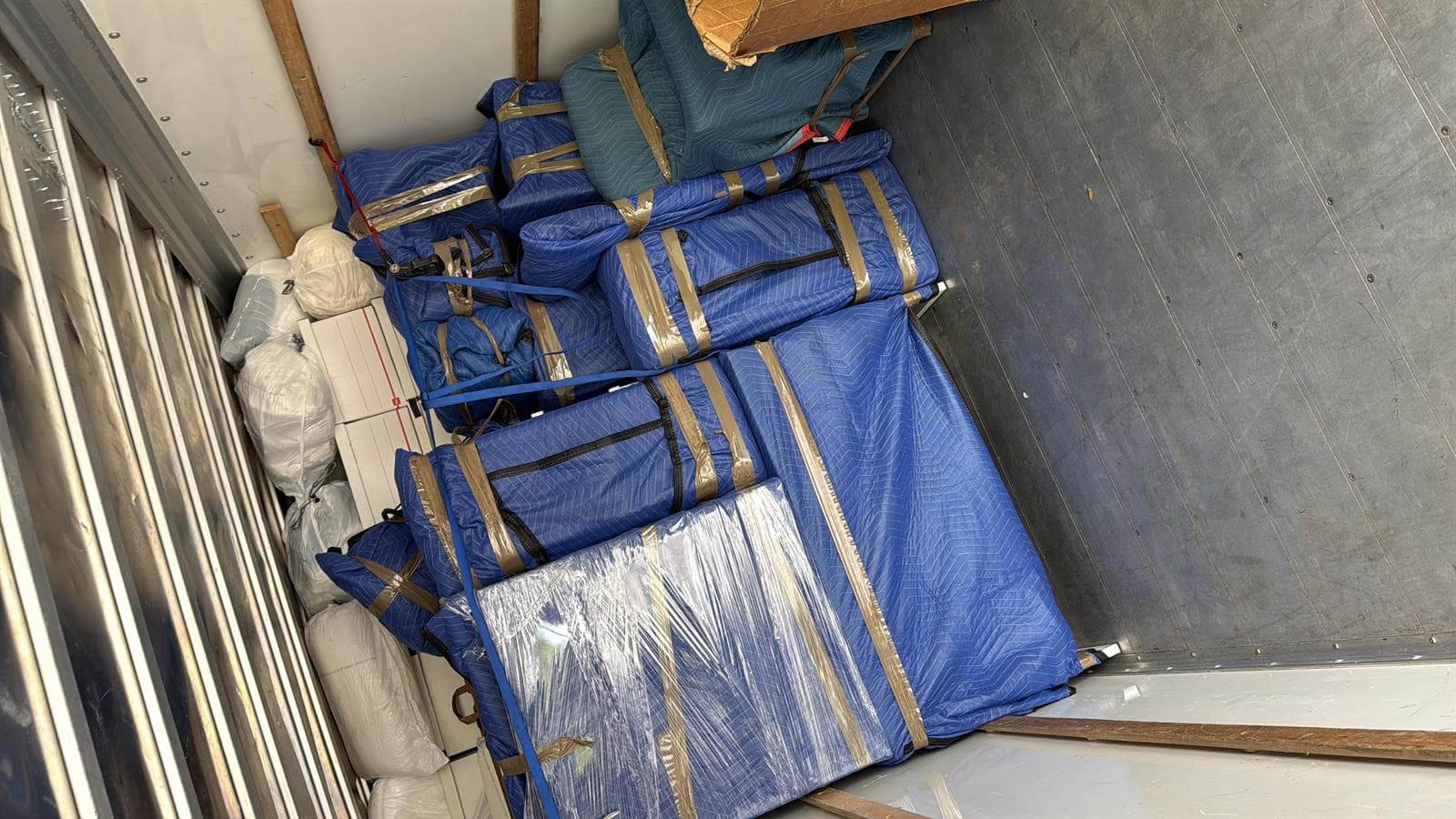
Before move day, we do a video call or in-person walkthrough to go over what's being moved, identify pieces that need specialty handling, map the access at both ends, and build a plan for how each item gets wrapped, loaded, transported, and placed. On move day, the crew arrives with that plan already in hand. Clean moving blankets, corner protectors, shrink wrap, mirror cartons, sofa covers, floor runners, and door frame padding are standard equipment on a white glove truck.
Every item is wrapped individually, not stacked together under a shared blanket, not loaded in groups of similar-sized pieces hoping nothing shifts in transit. Artwork gets glassine, bubble wrap, cardboard corners, and a custom-sized mirror carton. Upholstery gets plastic covers over blanket wrap. Case goods get corner protectors on every edge. Floors are covered. Door frames are padded. Nothing gets dragged, rushed through a doorway, or set down harder than it should be.
At your new home, furniture is placed exactly where you want it and adjusted until it's right. Boxes are unpacked by room. Packing materials (blankets, bubble wrap, used paper, flattened cartons) leave with the crew. You walk into a finished home, not a staging area full of work to do.
Licensed under Cal-T201700 with full cargo and liability insurance. White glove moves are billed hourly with a minimum, and pricing is explained upfront before the crew arrives. Every estimate includes a written Not to Exceed price.
What "White Glove" Actually Means (And What It Often Doesn't)
The term "white glove" gets used loosely in the moving industry. A lot of Bay Area movers advertise the service without changing anything about how they actually work: same crew, same truck, same techniques they use for a studio apartment, charged at a premium rate with the name attached.
Here's what separates the real service from the label.
A real white glove move starts with a walkthrough, not a phone call. The video or in-person walkthrough before move day isn't optional: it's the product. Going through the home piece by piece tells the crew what materials to bring, what techniques each piece needs, where the access problems are at both ends, and what the crew size needs to be. A mover who quotes white glove off a phone call without seeing the inventory is selling you a name, not a service. California law actually requires estimates to be based on an in-person or video walkthrough for any binding quote. Phone-only estimates aren't enforceable. On a white glove job, the walkthrough is also the moment where you flag specific pieces that matter most.
Every item is wrapped individually. Not grouped. Not stacked with shared padding between similar pieces. Every item gets its own blanket or carton. On a standard move, a crew might blanket-wrap a stack of kitchen chairs together to save time. On a white glove move, each chair is wrapped separately. This takes longer, substantially longer, which is part of what the hourly rate reflects.
The truck is loaded with intention. On a standard move, the goal is loading efficiently: filling the space, fitting the most cubic feet. On a white glove move, high-value pieces get their own zones on the truck, isolated from heavy items, secured with straps, and loaded in an order that matches the unload plan. Nothing is stacked on top of artwork. Nothing heavy sits next to a veneered antique. The load plan starts from the walkthrough.
Placement at the destination is deliberate. The crew doesn't drop pieces in a general area and let you shuffle them later. Each piece goes where you want it, gets adjusted until it's right, and gets confirmed before the crew moves to the next room. If a piece needs to be repositioned after the crew has moved on, that's a reset. On a white glove move, we try to get it right the first time.
Unpacking and material removal are included. The job isn't done at the front door. Boxes get unpacked, contents get placed on counters and shelves, flattened cardboard and used paper leave with the crew. You walk into a home you can actually live in, not a mountain of boxes you'll spend days sorting through.
If any of those five things aren't happening on a move someone's calling white glove, it's a standard move wearing a nicer label. The operational difference is real, and it's visible on the invoice because it takes longer crew-hours to do each step correctly, but what you're paying for is the work being done right, not the name.
The Pre-Move Walkthrough Is the Real Difference
This is the operational step that separates white glove from everything else, and it's worth explaining in detail because most customers have never experienced it.
The walkthrough happens 1–3 weeks before your move date, either on video or in person at your home. It typically takes 45 minutes to 90 minutes depending on the size and complexity of the inventory.
We go room by room. Every significant piece gets looked at individually. Dimensions get noted. Weight gets estimated. Materials and construction get identified: veneer versus solid wood, upholstered versus leather, antique versus contemporary. Pieces that need disassembly get flagged. Pieces that need specialty handling (art, mirrors, electronics, antiques, pianos, gun safes) get a specific plan for how they'll be wrapped and moved.
Access gets mapped at both ends. How does the truck park at the origin? At the destination? What's the distance from curb to door? Are there stairs? How wide is the staircase? Is there a landing with a turn? What's the doorway width at both ends? Is there a freight elevator, and what's the reservation process? Every one of these answers changes the crew size, the equipment list, and the time estimate.
High-value items get identified and valued. This is where the upgraded valuation coverage conversation happens. You identify pieces where the basic $0.60/lb liability would be laughably inadequate, and for most white glove customers, that's the majority of the inventory. Upgraded coverage through a third-party moving insurance provider gets priced based on real replacement values, not guesses. You make the decision before move day, not after something happens.
Your preferences get captured. Where does the primary bed go in the new bedroom? Which wall gets the artwork? Does the dining table orient north-south or east-west in the new dining room? How do you want the kitchen unpacked: dishes in upper cabinets, or glasses? The more specific you are at the walkthrough, the less decision-making happens on move day.
The plan gets written up. After the walkthrough, you get a written estimate that reflects the actual inventory, the actual access, and the actual crew size the job needs. Not a ballpark. Not a phone quote. A plan.
Most movers skip this step because it's labor-intensive and a significant portion of walkthroughs don't convert to bookings. But skipping it is what leads to surprise charges on move day, under-sized crews struggling with pieces that were bigger than described, and damage to items that needed materials the truck didn't bring. A serious white glove service treats the walkthrough as the foundation of the job, not an optional upsell.
Item-Level Protection: How Each Category Actually Gets Handled
"White glove" is abstract until you see what it means for specific pieces. Here's how each category actually gets handled on move day.
Original art and paintings. Wrapped first in glassine paper (archival, acid-free) so the wrapping doesn't interact with the surface. Then bubble wrap around the glassine. Then cardboard corner protectors on all four corners. Then a custom-sized mirror carton taped shut. Labeled "FRAGILE: ART" on multiple sides. Loaded upright, never flat, and never stacked under anything else. For extremely large pieces or museum-grade artwork that warrants custom wooden crating, that's specialty work through a dedicated crating vendor, worth arranging separately when the piece justifies it.
Antique furniture. Soft cotton pads go against any veneered, inlaid, or finished surface before blanket wrapping. This prevents pressure marks and compression damage that regular blankets can cause on delicate finishes. Then blanket wrap, then shrink wrap to hold the blanket in place, then corner protectors at every edge. Drawers get removed from larger pieces and wrapped separately to prevent the weight from stressing the joinery during transit. Disassembly gets documented with photos so reassembly matches the original configuration.
Upholstered furniture. Plastic sofa or chair covers go on first to keep fabric clean during the wrap process. Then moving blankets over the plastic, secured with shrink wrap. Pillows and cushions get their own blanket wrap or go in boxes to prevent them from getting dirty or misshapen in transit.
Mirrors, glass tabletops, and framed photographs. Same treatment as art: glassine where appropriate, bubble wrap, cardboard corners, custom mirror carton. Never stacked, never laid flat on another piece.
Electronics and audio equipment. Original packaging is ideal if you still have it. Manufacturers design their packaging for shipping, and nothing a mover brings is better than the factory carton. If original packaging is gone, electronics get anti-static bubble wrap, foam corner protectors, and appropriately sized cartons with packing paper filling all voids. TVs specifically go into TV boxes (up to 2 included with any move; additional TV boxes available). Speakers, amplifiers, turntables, and audio gear get individually wrapped and packed with the acknowledgment that movement during transit can misalign sensitive components, so reassembly and calibration at the new home may need a specialist.
Case goods (dressers, armoires, sideboards, china cabinets). Drawers come out and get wrapped separately. Glass shelves come out of china cabinets and get mirror-carton treatment. The body of the piece gets blanket-wrapped and shrink-wrapped with corner protectors. Larger pieces that won't clear doorways or stair turns as assembled get disassembled on site with documentation.
Pianos, gun safes, and heavy specialty items. Specialty equipment only: piano boards, stair-climbing dollies, heavy-duty ratchet straps, typically 4+ movers. Pianos specifically often warrant a dedicated specialty piano mover for that one piece even if we handle the rest of the move. A genuine Steinway, Bösendorfer, or historically significant instrument is worth the specialty vendor. We'll tell you straight when a piece is outside our scope rather than guess.
Wine collections. A wine fridge can move with the wine inside on a short local move where transit time is minimal and the fridge isn't running during transport. For serious collections where the wine itself needs temperature control during the move, that's outside our scope: specialty wine movers with climate-controlled trucks are the right call for the collection, and we can handle the rest of your move alongside.
The Valuation Coverage Conversation
On every other move, basic $0.60/lb liability is a footnote. On a white glove move, it's the single most important conversation you have before move day, and most movers skip it.
Here's the math most customers haven't thought about. California's default basic liability is $0.60 per pound per item. That's applied per piece, not to the whole load. In practice:
- A 40-pound painting is covered at $24.
- A 120-pound antique sideboard is covered at $72.
- A 200-pound grand piano is covered at $120.
- A 15-pound custom-framed photograph is covered at $9.
- A 300-pound armoire is covered at $180.
These numbers are essentially arbitrary relative to the actual value of the pieces. An original painting worth $15,000 is covered for $24 under basic liability. An antique sideboard from your grandmother that's genuinely irreplaceable is covered for $72.
We carry the standard $0.60/lb basic liability required by California law. For customers with inventory where that's inadequate (which is most white glove customers), the right move is third-party moving insurance purchased separately through a dedicated moving insurance provider. These policies cover replacement value on high-value pieces rather than per-pound rate, and they're priced based on the declared value of the inventory. Several providers specialize in this, and it's worth getting quotes from a couple of them before your move date.
Check your homeowner's insurance too. Some homeowner's policies include coverage for items in transit during a move, but most have exclusions: some cover only damage caused by the mover's negligence, some have dollar caps, some exclude fine art and antiques entirely. Call your carrier before move day and ask specifically about transit coverage. Get the answer in writing.
At the walkthrough, we go through your inventory and flag pieces where basic liability wouldn't cover the loss. You make the coverage decision before move day with real numbers, not after something happens with claim forms. This is the part of white glove that nobody advertises but every serious customer cares about.
What to Expect on Move Day
The crew arrives with a plan. Because we've already gone over your inventory and home layout on a video call or in-person walkthrough, nothing on move day is being figured out for the first time. The crew knows which items get what level of protection, what the path looks like at both locations, and where everything is going.
Your home is protected before anything moves. Floor runners go down in every path the crew uses. Door frames get padded where furniture will pass through. Banisters get wrapped where staircases are involved. Any furniture already in the destination home that could be scratched by passing carts or boxes gets shrink-wrapped before the first piece enters.
Wrapping happens piece by piece, in place. The crew doesn't start loading the truck until the wrapping is done. Efficient loading requires that everything be ready to go, which prevents the wrap-and-load-simultaneously shuffle that leads to items being carried before they're fully protected.
The truck gets loaded with intention. High-value pieces get dedicated zones, strapped, isolated from heavy items, and loaded in reverse order of unload (first in, last out). Standard efficient loading treats the truck as a packing problem. White glove loading treats it as a protection problem.
Placement is deliberate. At the new home, each piece gets placed where you want it, adjusted until it's right, and checked before the crew moves on to the next room. If something needs to be repositioned, that happens before packing materials are removed.
You're not left with work to do. Boxes get unpacked, contents get placed, packing materials get broken down and leave with the crew. Most of our white glove customers tell us skipping days of unpacking is what they appreciated most: not the wrapping techniques, not the careful loading, but walking into a finished home on day one.
White Glove Moves We Do Every Week
Most of our white glove work falls into a handful of patterns.
Walnut Creek, Orinda, Moraga, and the Lamorinda corridor. Large single-family homes with custom furnishings, serious art, home offices, wine collections, and the expectation that every piece gets handled correctly without having to ask twice. Hillside driveways and long walkways from the street to the front door are common. Crew size and staging get planned around access. These are often the longest white glove jobs we do, sometimes running two days (one pack day, one move day) for proper execution.
Piedmont and the Oakland hills. Homes in Piedmont, Montclair, and the Rockridge hills often combine the access challenges of hillside properties with the inventory value of established homes: inherited antiques, art collections built over decades, custom furniture from specific designers. The walkthrough matters even more here because the path from truck to door often isn't straightforward.
San Francisco Victorians and Edwardians in Pacific Heights, Russian Hill, Nob Hill, and the Marina. Tight staircases, steep grades, street-only parking, and interior doorways that weren't designed for modern furniture. Doorways are often original construction at 30 inches. Full-sized sectional pieces, large armoires, and modern platform beds don't fit without disassembly. Historic homes with original finishes need extra floor and wall protection beyond standard move materials. Parking requires SFMTA permits pulled weeks in advance.
Newly renovated homes and new construction. Moving into a home that's just been renovated or newly built is a specific white glove pattern: the expectation is that the move doesn't damage anything that was just finished. Every doorway, every wall edge, every floor plank is fresh, and the margin for error is zero. We wrap the whole path before anything moves. These jobs often coincide with the homeowner's decision to get third-party moving insurance for the move because the home itself isn't something you want to risk.
Downsizing moves with carefully selected inventory. Customers moving from a larger home into a smaller one where every piece making the move is something they chose to keep: the art they love, the furniture they've had for decades, the pieces that don't come back. These moves have higher emotional stakes even if the inventory is smaller, and the placement phase at the new home matters more because fewer pieces means every one has to land in the right spot.
Richmond, El Cerrito, and the inner East Bay. High-end moves in Richmond Annex, Albany Hill, and the Kensington area are a steady part of our work. These neighborhoods often have straightforward access compared to the SF and Lamorinda patterns, which means more of the job budget goes into execution quality rather than fighting logistics.
Alameda Gold Coast and historic homes. Victorian and Craftsman homes on the Gold Coast have beautiful original finishes and the same narrow doorways and stair challenges as Berkeley and SF Victorians. White glove here means protecting original millwork, hardwood floors that may be a century old, and plaster walls that scuff from a single careless pass.
If any of your items need custom fragile packing before move day, our fragile item moving service pairs with white glove for pieces like large mirrors, artwork, china, or delicate antique finishes.
What to Do Now
- Call or fill out the online form for a free estimate and to schedule the pre-move walkthrough. For a white glove job, the walkthrough is not optional: it's how the estimate gets accurate.
- Make a list of pieces that matter most. Not an exhaustive inventory: just the items you'd be most upset about if they were damaged. That list drives the walkthrough and the valuation coverage conversation.
- Get a moving insurance quote from a third-party provider if you have inventory that exceeds basic $0.60/lb liability. Arrange it before move day, not after.
- Call your homeowner's insurance and ask specifically about transit coverage during a move. Get the answer in writing.
- Confirm building and access logistics at both ends: freight elevator reservations, parking permits, COI requirements, move-in hours. We handle the COI if one's needed.
- Handle appliance disconnects and TV unmounts with the relevant technicians before move day. White glove doesn't include electrical or gas work. That needs a licensed specialist.
Before hiring any mover for a premium job, verify their California moving license through the BHGS license search tool. Licensed movers are required to carry liability coverage and provide written estimates. Our license number is Cal-T201700. The California moving consumer rights guide from BHGS is worth reading before you sign with anyone.
See all our moving services or get your free estimate today.
Get a Free Estimate
Call us or fill out our form for an honest quote with no hidden fees.
(510) 495-1884Or fill out our formWhy JH Moving
Professional Moving Services in Action
Everything You Get With White Glove & Luxury Moving
What Customers Say About Our White Glove Moving
Real customers, real moves, real results.
Frequently Asked Questions
White glove moving includes a pre-move video call or in-person walkthrough to go over your inventory and plan the job, individual protective wrapping for every item, custom protection for art, mirrors, and antiques, floor and door frame protection throughout both homes, careful loading with clean blankets and custom padding, transport in a fully equipped truck, precise room-by-room placement at the destination, unpacking, and removal of all packing materials when the job is done. You walk into a finished home, not a staging area full of boxes. It is a complete service from planning through setup, not a standard move with a higher price tag.
You Might Also Need
Ready for a White Glove Move in the Bay Area?
Your belongings deserve more than a standard move. Get a free estimate for white glove service: no hidden fees, no surprises.
Licensed Cal-T201700. Full cargo and liability insurance. 300+ five-star reviews from Bay Area homeowners.
Call (510) 495-1884 or request your free estimate online.
Serving the East Bay, Marin & San Francisco