Office Packing Services in Richmond, CA
JH Moving provides commercial and office packing services in Richmond and across the Bay Area. Whether your business is in Downtown Oakland, Walnut Creek, or San Francisco's Financial District, our crew packs and labels every box, cable, and file so your team gets back to work fast. Licensed Cal-T201700. Call (510) 495-1884 for a free office packing estimate.
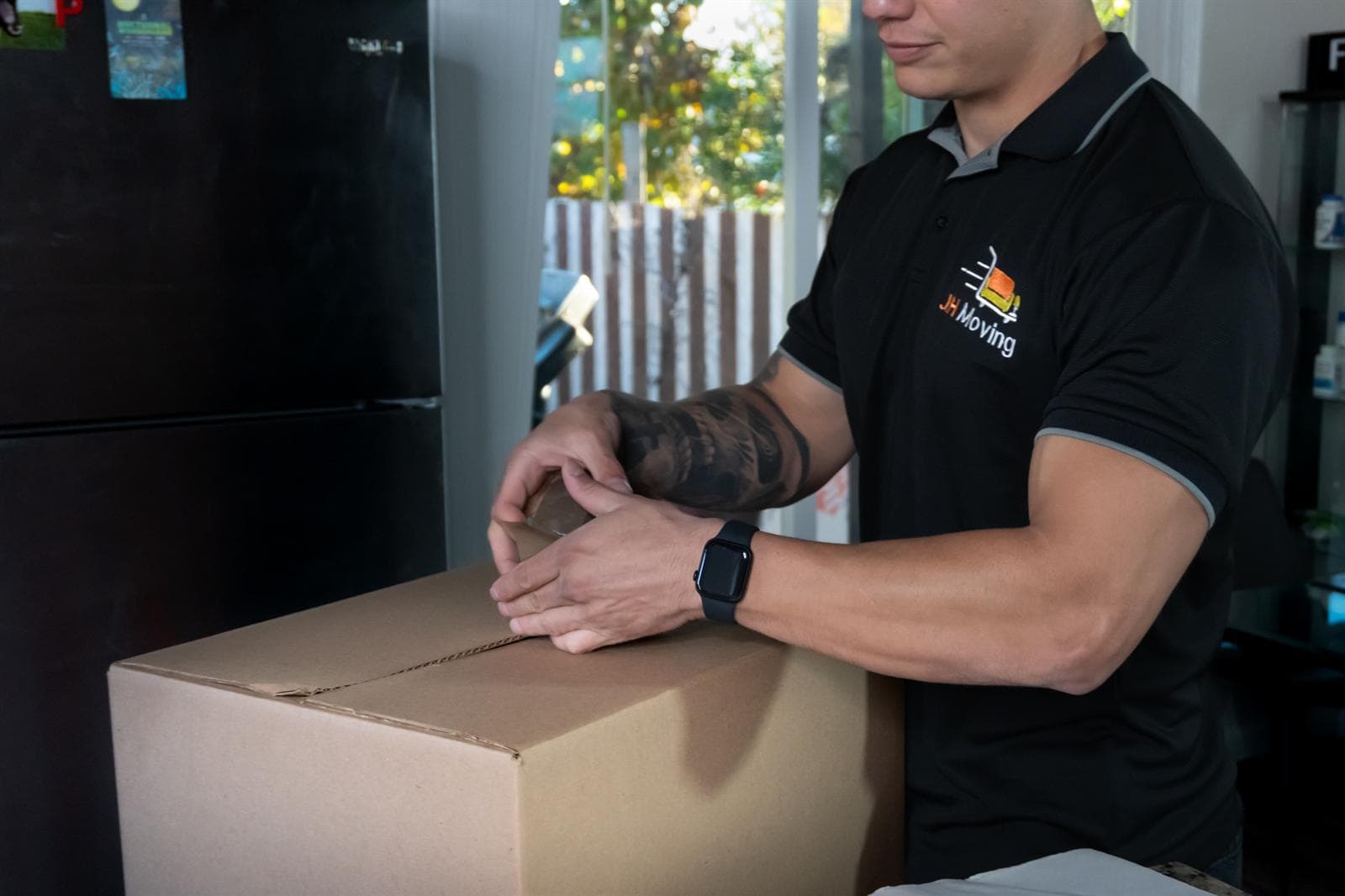
Licensed & Insured
Cal-T201700
Office Packing That Keeps Your Business Running
Every office has different needs. A tech startup in San Francisco has racks of monitors and a dense server room. A law firm in Walnut Creek has decades of case files. A nonprofit in Berkeley has grant archives, shared equipment, and a break room full of donated coffee mugs. A medical practice in Concord has patient records, exam room equipment, and strict HIPAA obligations. We handle the physical packing and moving for all of these, coordinated with the vendors who handle the specialty work (IT, furniture installation, records management) that's outside a mover's scope.
Your office packing includes a trained crew that brings every material quoted in your estimate: standard boxes in multiple sizes, file boxes for cabinet contents, dish boxes for break room and kitchen areas, bubble wrap, anti-static wrap for electronics, mirror cartons for framed artwork, and specialty cartons for monitors. Materials are quoted as line items in your estimate so you see exactly what the job needs. Every booked move also includes moving blankets, shrink wrap, tape, floor runners, corner guards, crew tools, up to 2 TV boxes, and up to 5 wardrobe boxes at no extra charge.
Billing is hourly with a minimum, 15-minute increments after that, and every estimate includes a written Not to Exceed price. A $100 deposit secures your date and applies to the final invoice. Licensed under Cal-T201700 with full cargo and liability insurance.
How Office Packing Works
-
Walkthrough and estimate. Call (510) 495-1884 or request a walkthrough at /free-estimate/. For offices larger than a single suite, we always recommend an in-person walkthrough over a phone quote because the variables (access, elevator rules, IT density, file volume, furniture type) can't be assessed remotely with accuracy.
-
Packing plan coordinated with your team. We build a written plan that identifies who handles what, when. Your IT team's disconnect work precedes our packing work. Our packing work precedes the furniture installer's cubicle teardown, if applicable. The move itself follows packing. The new office setup follows the move. Each phase has a clear handoff.
-
Packing executed on schedule. Our crew arrives with the materials quoted, works through the office room by room, and labels every box to match the agreed-upon system. Weekend and after-hours packing is standard for business continuity.
-
Box count and location documented. We produce a box count by category and destination so your team can verify completeness at the new office. This isn't asset-level inventory with serial numbers (that's a different service), but it's enough to confirm nothing was left behind.
The Friday-to-Monday Office Move Playbook
The pattern that works for most small-to-mid-size office relocations, where the goal is Friday close of business to Monday reopening without business disruption.
Wednesday to Thursday: IT prep. Your IT team images machines, backs up critical data, and coordinates with your cloud providers for any service transitions. Network equipment, phones, and shared infrastructure get documented. For offices with server rooms, your IT team or IT relocation firm begins the server prep process, which may include extended backup runs and failover configuration. This happens before our crew arrives.
Thursday evening: employee desk prep. Employees pack personal items from their desks, take them home, or leave them in a clearly marked personal box. This is a five-minute task per person that prevents the most common office move problem: lost or damaged personal items that employees blame the mover for.
Friday evening (after close of business): IT disconnect. Your IT team powers down and disconnects computers, monitors, network equipment, and phones. Cables get labeled at the source (computer-side and wall-side) so reconnection is straightforward. Equipment is left in place for our crew to pack.
Friday night into Saturday morning: packing. Our crew arrives Friday evening or Saturday morning depending on timing and building access rules. We pack disconnected IT equipment with anti-static wrap and appropriate boxes, pack files in source order with destination labels, pack break room and kitchen contents, and wrap furniture for the move. For a 20-person office, this is typically 8 to 12 hours of packing work with a 4-person crew.
Saturday: move. Truck loads at the old office, drives to the new location, unloads. Furniture gets placed according to the new floor plan. Boxes go to their labeled destination rooms. For offices within the Bay Area, a move like this usually fits in a single day.
Saturday evening to Sunday: IT reconnect and setup. Your IT team (or vendor) reconnects computers, monitors, servers, network equipment, and phones. Furniture installer (if applicable) handles cubicle reassembly. Facilities team does final setup.
Monday morning: operational. Employees arrive, sit down at their desks, log in, and work. The ideal outcome is that from their perspective, everything just moved.
What makes this playbook work. Clear handoffs between vendors (IT, movers, furniture installer, facilities). Employee personal items removed before pack day. IT disconnect completed before we start packing. Destination labels based on the new floor plan, not the old one. A single office manager or facilities contact coordinating the whole sequence rather than multiple parallel contacts creating conflicting instructions.
Where Moving Ends and IT Starts
The biggest source of confusion on office moves is scope between the moving company and the IT team. Getting this wrong is how data gets lost, networks stay down past the reopening date, and vendors blame each other while the business can't operate.
What the moving crew does. Physical packing of IT equipment after your team has disconnected it. Transport. Physical unpacking at the new location. Placement of equipment at the destination workstation or server room.
What the moving crew doesn't do. Disconnect cables from the back of computers, servers, or network equipment. Document network configurations. Handle server shutdown procedures. Reconnect cables at the destination. Configure network equipment at the new office. Verify IT functionality after the move.
Why the boundary matters. Your IT environment is specific to your business. Cable configurations, server rack layouts, network equipment relationships, VLAN configurations, and service dependencies are all things your IT team knows and our crew doesn't. A mover unplugging cables from a server without knowing the dependencies can take down services, lose configurations that weren't documented, or damage equipment handled without the right procedures. A mover reconnecting cables at the new office can put things in the wrong ports, create network loops, or miss failover configurations.
Who handles IT disconnect and reconnect. For small offices, your internal IT team or your IT services vendor (MSP). For mid-size offices with dedicated IT staff, your internal IT. For large offices with complex server environments, a specialized IT relocation firm. Bay Area firms that handle this work include Clancy, TechTeam Solutions, and various MSPs with office move experience. We coordinate timing with whichever vendor is handling IT, but we don't replace them.
Honest pricing logic. If a mover quotes you a price that includes "full IT handling," ask specifically what that means. Often it means the crew will unplug and plug things back in without actually knowing what they're doing, which is when things go wrong. Clean scope boundaries protect you.
File Packing and Labeling That Actually Works
Office files are a packing challenge that looks simple but has real failure modes.
The volume reality. A typical 4-drawer letter-size filing cabinet holds about 8,000 to 10,000 sheets of paper across 4 drawers. Packed into standard file boxes (which hold about 2,000 to 2,500 letter-size sheets each), one cabinet produces 3 to 5 boxes depending on how densely packed the drawers were. A typical law firm or accounting office with 20 to 30 filing cabinets produces 60 to 150 file boxes from the file room alone.
Source-based vs. destination-based labeling. Two schools of thought, and the right choice depends on your situation.
Source-based labeling tracks where each box came from: "Accounting, Cabinet 3, Drawer 2." This works when the new office layout mirrors the old one and files will go back into the same organizational structure. Reloading cabinets is straightforward because the boxes arrive in the order they were packed.
Destination-based labeling tracks where each box is going: "Conference Room A bookshelf, Accounting Row 3, Legal file room Section 2." This works when the new office has a different layout and files won't simply reload into identical cabinets. Reloading requires less cross-referencing because the boxes are pre-sorted to their new home.
Most offices use a hybrid: source information on the box for verification, destination information as the primary label for placement.
What we don't do. We don't open sealed files to verify contents. We don't run chain-of-custody protocols for legal or medical records (this is a specialty service with documented handling procedures, signed transfers, and HIPAA-compliant storage requirements). We don't reorganize filing systems during the move. We pack what's in the cabinets as-is and move it to the labeled destination.
For records with CoC requirements. If your files are subject to chain-of-custody requirements (active legal discovery files, medical records under HIPAA, financial records under SOX, government contracts, etc.), a records-management firm with CoC certification is the right vendor. Firms like Iron Mountain, Access Information Management, and various regional records-management specialists handle CoC moves with the documentation trail your compliance program requires. For everything else, a standard office mover handles file packing fine.
Commercial Building Requirements: What to Plan For
Commercial moves have logistical requirements that residential moves don't, and missing them can delay or cancel a move.
Certificates of Insurance (COIs). Most Bay Area commercial buildings require movers to submit a COI to building management before move day. The COI proves the mover carries appropriate insurance coverage, and building requirements vary by property owner. Hines, BXP (Boston Properties), Shorenstein, Kilroy, and most other institutional owners require specific language including the building entity and property manager as additional insured. Typical coverage requirements are $2 million to $10 million general liability, $1 million to $5 million auto liability, and workers' compensation. We handle COI issuance as part of the move prep, but submission needs to happen at least one week before move day, often two weeks for larger properties.
Freight elevator reservations. Commercial buildings almost always have dedicated freight elevators separate from passenger elevators. Most require advance reservations (typically 48 to 72 hours, sometimes up to two weeks for busy properties). The reservation usually specifies an arrival window and a duration. Going over the reservation window can mean the elevator gets locked down for the next user, which strands your move mid-progress. We coordinate elevator reservations with building management as part of the move plan.
Loading dock and service entrance access. Most commercial buildings require moves to use loading docks rather than main entrances. Docks have size limits (height and length), access hours, and sometimes require security coordination. Some buildings have limited dock bays that need to be reserved. Main entrance access for moves, when permitted, usually requires floor protection in the lobby and elevator landings.
After-hours access. Weekend and evening moves often require a building-appointed access coordinator or security personnel to be present. This is typically billed by the building at hourly rates separate from your move cost, and needs to be scheduled when the elevator reservation is made.
Loading zone and street access. Moves at buildings without docks may require street-level loading, which in cities like San Francisco, Oakland, and Berkeley means permit coordination with the city for extended truck parking. SF buildings in particular often require both building permission and SFMTA permits for street parking.
Phased Packing for Larger Offices
For offices of 50 or more workstations, a single-day pack is rarely realistic. Phased packing spreads the work across multiple sessions without disrupting business operations.
Week before move: non-essential spaces. Storage rooms, archive rooms, rarely-used conference rooms, supply closets, and overflow areas get packed while the business continues to operate normally. These boxes get staged and labeled but don't move yet.
Evenings in the move week: department-by-department. Individual departments pack their desks, files, and equipment on scheduled evenings. Marketing Monday evening, Accounting Tuesday evening, Legal Wednesday evening. Each department is back to operational capacity the following morning with their essentials still accessible.
Thursday evening or Friday after close: final sweep. Shared spaces (break room, copy room, reception, conference rooms) get packed. Last-remaining department desks get finalized. IT equipment gets packed after disconnection.
Move day: execution. The move itself happens with everything already packed and staged.
Monday morning: operational. Same goal as the smaller-office playbook, just achieved through a longer packing timeline.
Phased packing costs more total hours than a single-day pack because it involves more crew mobilizations, but it dramatically reduces business disruption. For most mid-size and large offices, the trade-off is worth it.
What Your Team Needs to Handle
Even with a full-service office pack, a few things stay on your side.
IT disconnect and reconnect. Covered above. Your IT team handles this, not our crew.
Personal items. Employees should remove personal effects from their desks and bring them home before pack day. Family photos, desk plants, personal electronics, coffee mugs, coats, and anything that isn't office property. Personal items get lost or damaged more often than anything else on office moves, not because of careless packing but because they end up mixed with department boxes and disappear at the new office. Giving employees one hour on Thursday afternoon to clear their desks solves this entirely.
Confidential and high-value items. Anything subject to special handling (cash boxes, signed contracts in active transactions, corporate seals, high-value small items) should be handled by a designated employee, not packed with general office contents. Flag these at the walkthrough so we know to leave them for your team.
Furniture installer coordination. If your office has cubicle workstations, lab benches, modular conference tables, or other furniture requiring specialty installation, coordinate the installer schedule with the move plan. Teardown at the old office happens after we pack contents. Reassembly at the new office happens before we unload furniture-related boxes.
Destination floor plan. Provide a floor plan of the new office with workstation assignments, conference room names, and department zones. This is the basis for our destination labeling. A clean floor plan with labels makes unpacking dramatically faster.
Commercial Packing We Do Every Week
Tech company relocations. Office expansions, consolidations, and new-space moves for companies in Oakland, San Francisco, Emeryville, and the broader East Bay tech corridor. Usually phased packs coordinated with IT vendors and furniture installers. Monitor-heavy, cable-heavy, and often involving open-plan reconfigurations.
Law firm moves. File-heavy packs with careful labeling and coordination with records managers where CoC is required. Common in Walnut Creek, Oakland Downtown, and SF Financial District. Law firms usually prefer weekend moves with packing starting Thursday evening.
Medical and dental practice moves. Equipment-heavy with specialized handling for exam room furniture, imaging equipment (scope boundary: movers transport; medical equipment service reps handle calibration and installation), and patient record files. Common in Walnut Creek, Concord, and Berkeley.
Nonprofit relocations. Often budget-constrained and schedule-constrained. We work with executive directors and operations managers on pack timelines that fit both operational needs and funding cycles.
Small office expansions and moves within a building. Floor-to-floor or suite-to-suite moves in the same building where the move itself is short but packing and sequencing still matter.
Corporate closures and downsizings. Where part of an office's contents goes to a new smaller space, part goes to storage, and part gets donated or disposed of. Split-destination packing and moving, coordinated with your facilities and finance teams.
What to Do Now
- Schedule a walkthrough by calling (510) 495-1884 or requesting a free estimate. Office moves of any meaningful size need an in-person walkthrough, not a phone quote.
- Identify your IT vendor early. Internal team, MSP, or IT relocation specialist. This determines the handoff timeline for the pack.
- Identify your furniture installer if you have cubicle, modular, or specialty furniture. This determines the teardown and reassembly schedule.
- Get your new office floor plan labeled with workstation assignments and department zones for destination labeling.
- Verify your building's COI and elevator reservation requirements at both ends of the move as early as possible.
- Communicate the timeline to employees so they know when to pack personal items and when IT disconnect happens.
Before hiring any mover for commercial work, verify their California moving license through the BHGS license search tool. Our license number is Cal-T201700.
Pair office packing with full office relocation for a complete move, or see our full packing services menu.
Get a Free Estimate
Call us or fill out our form for an honest quote with no hidden fees.
(510) 495-1884Or fill out our formWhy JH Moving
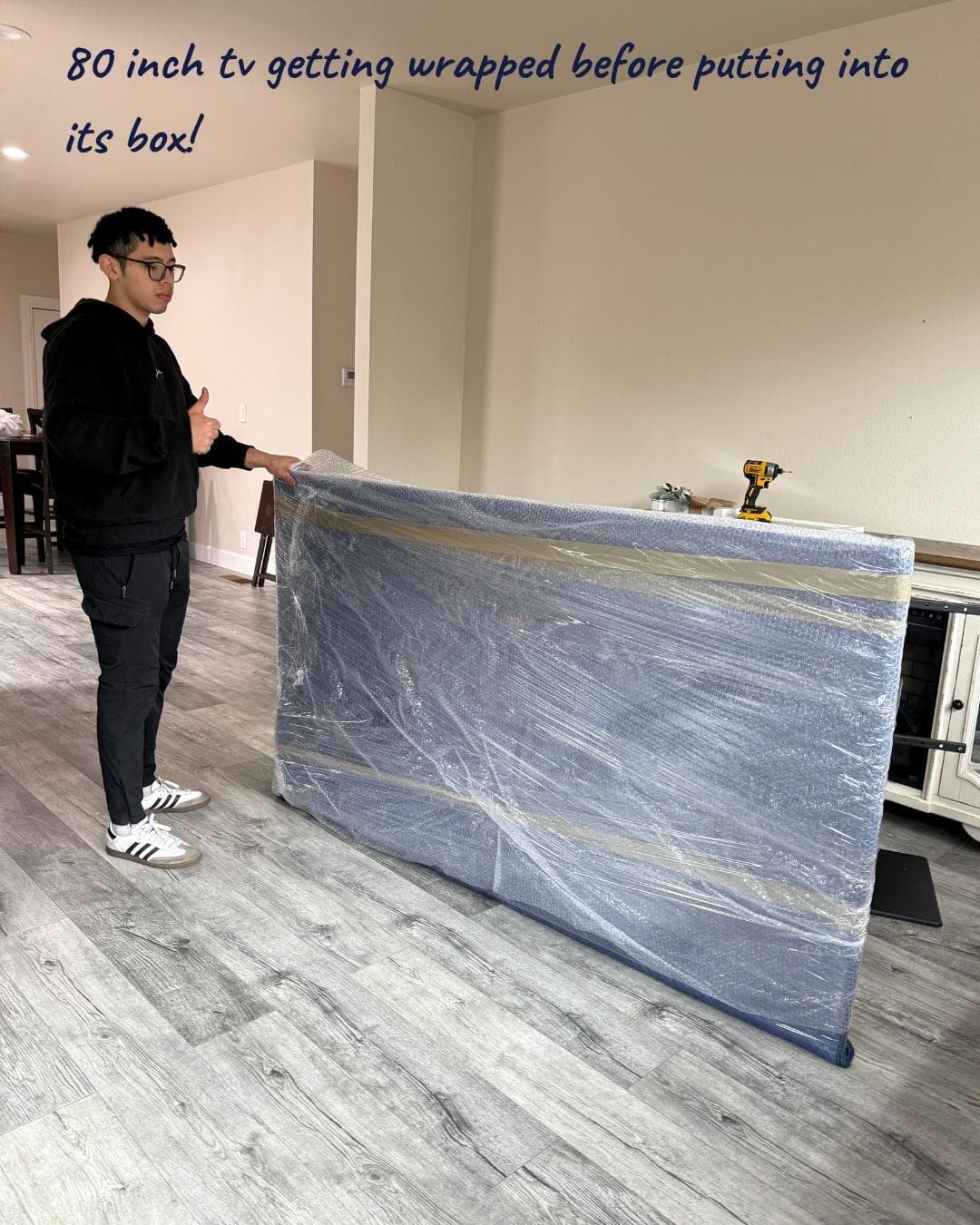
Professional Packing Services & Moving Supplies in Action
Everything You Get With Commercial & Office Packing Services
What Bay Area Businesses Say About Our Office Packing
Real customers, real moves, real results.
Frequently Asked Questions
It depends on the size of the office, the volume of files and equipment, and how much of the work happens after business hours. Billing is hourly with a minimum, prorated in 15-minute increments, and every estimate includes a written Not to Exceed price, which is the legal maximum you can be charged for the job as scoped. A small office of 10 to 15 workstations typically takes a half day to a full day. Mid-size offices of 30 to 50 workstations usually need a phased approach across two days or more. Large offices and multi-floor moves are scoped as project work. Packing supplies (standard boxes, file boxes, dish boxes for kitchens, bubble wrap, anti-static wrap, specialty cartons for monitors) are quoted as line items in the estimate. A $100 deposit secures your crew and applies to the final invoice. Call (510) 495-1884 for a walkthrough and quote.
You Might Also Need
Get Your Free Office Packing Estimate
Tell us about your office: workstation count, file volume, IT scope, and timeline. We'll walk the space, coordinate with your building, and give you an honest quote with pricing explained upfront.
Licensed Cal-T201700. Full cargo and liability insurance. 300+ five-star reviews from Bay Area businesses and families.
Your business doesn't stop. Neither does our planning.
Serving the East Bay and Bay Area